

Key Takeaways
- Anxiety affects both mental and physical health, often in ways that are not immediately visible.
- It can lead to weight loss or weight gain, depending on how the body and mind respond to stress.
- Changes in the body – especially weight loss, appetite shifts, or physical symptoms – can be early signs that support is needed.
- Ongoing stress can quietly reduce appetite, leading to unexplained weight loss over time.
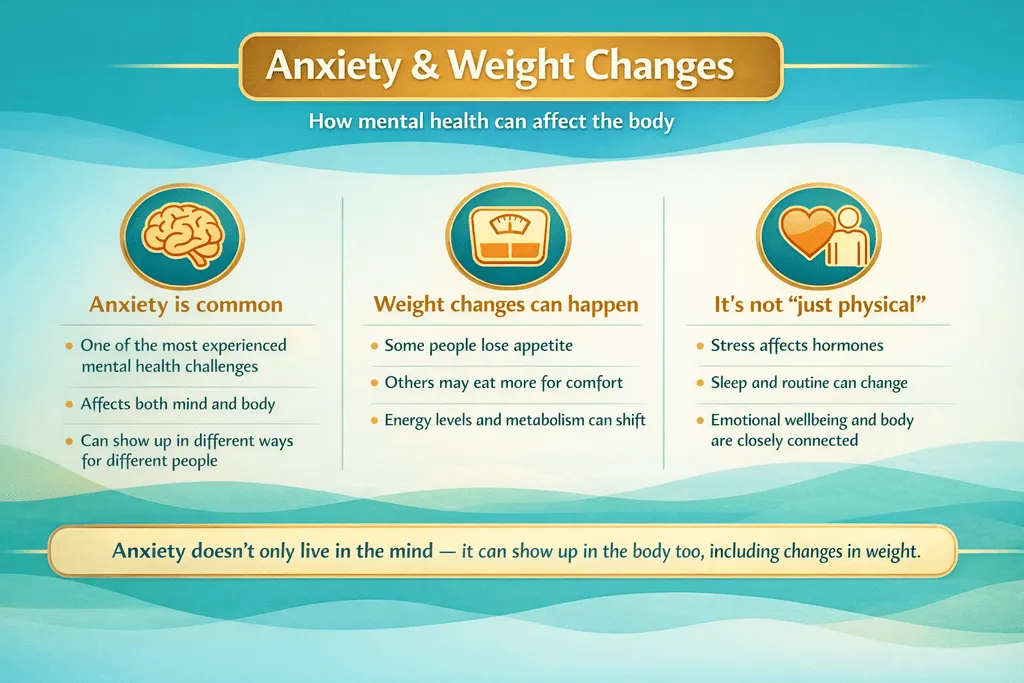
Anxiety can lead to unintentional weight loss in several ways. It can reduce appetite, making it harder to eat regularly. Ongoing stress also keeps hormones like cortisol and adrenaline active, which can speed up metabolism. Some people experience digestive discomfort, while others feel more restless and burn more energy. When the body is in a constant “fight or flight” state, meals are often skipped, or portions become smaller, which can lead to weight loss over time.
Anxiety is one of the most common mental health conditions people experience. Beyond their psychological impact, many people also experience changes in weight during periods of anxiety and prolonged stress.
Common Causes of Anxiety
Research from the World Health Organisation estimates that hundreds of millions of people experience anxiety disorders each year. It is further shown that anxiety is influenced by a combination of biological, psychological, and environmental factors that interact over time.
Exposure to trauma, long-term stress, or unpredictable environments can change how the brain processes fear and safety. Areas such as the amygdala become more reactive, which can make situations feel overwhelming even when there is no immediate danger.
Modern lifestyle factors also contribute. Increasing research points to the impact of constant digital exposure, social comparison, and information overload. Studies suggest that frequent social media use is associated with higher levels of anxiety, particularly due to comparison, pressure to meet expectations, and continuous stimulation without rest.
Stressful Life Experiences
Big or ongoing pressures can keep the mind in a constant state of alert.
This might include work stress, financial worries, relationship difficulties, or major life changes like loss, instability, or uncertainty about the future.
Past Experiences and Trauma
Difficult or overwhelming experiences can stay with a person long after the situation has passed.
The body can continue reacting as if something isn’t safe, even in moments that seem calm on the surface.
Overthinking and negative thought patterns
A mind that keeps analysing, replaying situations, or expecting the worst can become exhausting to live with.
Over time, it becomes harder to switch off, and even small things can start to feel overwhelming.
Physical health and body factors
Sleep disruption, hormonal changes, illness, or stimulants like caffeine can all intensify anxiety.
When the body feels unsettled, the mind often follows.
Personality and sensitivity
People who are more aware, empathetic, or detail-focused often experience the world more intensely.
That depth can be a strength, but it can also make it easier to feel overloaded.
Uncertainty and lack of control
When life feels unpredictable, the mind tries to prepare for every possible outcome.
That constant “mental scanning” can keep anxiety going throughout the day.
Lifestyle patterns
Irregular routines, lack of rest, or not having space to pause can keep the nervous system in a heightened state for longer than it needs to be.
Social media and constant comparison
Social media can quietly shape how a person sees themselves and their life.
Endless scrolling, comparison to others, pressure to keep up, and exposure to negative or overwhelming content can all increase anxiety—sometimes without it being immediately obvious.
Trends around appearance, productivity, or “perfect” lifestyles can create a sense of not being enough or falling behind.
What often makes this difficult is that these factors don’t exist on their own—they build on each other over time.
And if any part of this feels familiar, it doesn’t mean something is “wrong.”
It usually means the mind and body have been trying to cope for a while without the right kind of support.
Can My Mind Really Change My Weight?
Yes, the mind has a real impact on weight. It affects how people eat, how they respond to stress, and how they cope emotionally – all of which influence the body. The brain tends to hold on to current weight and can push back against weight loss. But over time, habits can change with a steady, intentional shift in mindset, rather than relying on short bursts of willpower.
If anxiety symptoms are leading to unexpected weight loss, it can be helpful to understand the connection and consider ways to manage it, including seeking professional help.
The Link Between Mindset and Weight
The “set point” idea:
The brain works a bit like a thermostat, trying to keep weight within a familiar range. When weight drops, it can respond as if the body is under threat – slowing metabolism and increasing hunger to bring things back up.
Changing patterns:
Long-term weight change often starts with recognising and shifting automatic habits. These patterns – sometimes built early in life or during stressful periods – can drive things like overeating without much awareness.
Mindset matters more than strict dieting:
Seeing setbacks as part of the process makes it easier to stay consistent over time. A more rigid, all-or-nothing approach to dieting often brings frustration, guilt, and cycles of losing and regaining weight.
The role of stress and emotions
Stress and fat storage:
Ongoing stress raises cortisol levels. This can increase cravings for high-fat, high-sugar foods and is linked to more fat being stored around the stomach.
Emotional eating:
When stress builds up, food is often used as a way to cope or find comfort. In those moments, it can be harder to stick to healthier choices, even when the intention is there.
The Biology of Anxiety-Related Weight Loss
Scientists discover a direct link between anxiety symptoms and weight loss. Research found a key molecule that triggers anxiety in the brain, while also increasing metabolism and fat burning.
This means the body can shift into a heightened “stress mode,” where energy is used more quickly than usual. Over time, this can lead to noticeable weight loss, even without changes in diet or physical activity.
Here are some of the most common biological mechanisms behind anxiety-related weight loss:
Hypermetabolism and Stress Hormones
Ongoing anxiety keeps the body in a constant “fight or flight” state, raising the basal metabolic rate (so more calories are burned even at rest) and increasing muscle breakdown due to higher cortisol levels.
Adrenaline (Epinephrine) Response
Adrenaline acts like a natural stimulant, often suppressing appetite while speeding up metabolism.
Brain-Led Metabolic Changes: Studies suggest that heightened activity in fear and anxiety-related brain circuits – especially in the amygdala – can increase sympathetic nervous system activity and metabolic rate, which may lead to weight loss.
BDNF Involvement: Brain-derived neurotrophic factor (BDNF) also plays a role. Changes in this pathway have been linked to increased appetite and weight gain, while activation of certain anxiety-related circuits appears to have the opposite effect, contributing to weight loss.
The Fight or Flight Response
When anxiety is present, the body moves into a survival mode designed to protect in moments of danger. Energy is redirected away from processes like digestion and toward systems needed for immediate action – such as heart rate, breathing, and muscle readiness. Over time, this can reduce appetite and disrupt normal digestion, contributing to unintended weight loss.
The Cortisol & Adrenaline Factor
Stress hormones like cortisol and adrenaline remain elevated during ongoing anxiety. This creates a constant metabolic push, where the body is using more energy than usual – even at rest. It can feel as though the body is always “on,” burning through calories quickly, sometimes alongside reduced hunger or irregular eating patterns.
Key Signs Anxiety is Causing Weight Loss
Key signs that anxiety may be behind weight loss include unintentionally losing around 5% or more of body weight, ongoing loss of appetite, and persistent digestive issues. Anxiety doesn’t only stay in the mind – it affects the body too, disrupting appetite, digestion, and metabolism over time.
Common symptoms include:
- Reduced appetite – feeling full quickly, forgetting to eat, or having little interest in food
- Unintentional weight loss – clothes fitting looser without changes in diet or exercise
- Constant restlessness or tension – the body stays “on edge,” using more energy than usual
- Digestive issues – nausea, stomach discomfort, or frequent bowel changes
- Eating feels overwhelming – meals may trigger stress rather than comfort
- Increased heart rate or sweating – even at rest, linked to heightened adrenaline
- Low energy levels – feeling fatigued while still eating less
- Difficulty concentrating – mental strain that disrupts regular eating habits
Some of the most significant of these symptoms are explained in more detail below.
Appetite Suppression
Anxiety can quietly take away the natural feeling of hunger. Food may stop feeling enjoyable, and eating can start to feel like a task rather than something to look forward to. When the body is constantly on edge, it shifts focus away from digestion, which means meals are skipped, portions get smaller, and eating becomes less regular without even noticing.
Rapid Weight Loss
Weight can begin to drop without any real intention. Clothes may start to feel looser, and the change can happen quicker than expected. With the body under constant stress and not getting enough fuel, it uses up more energy than it takes in, leading to a steady, sometimes worrying, loss of weight.
Nausea
Anxiety often shows up in the stomach. There can be a constant uneasy feeling, like something isn’t quite right, making food hard to face. Even small meals can feel overwhelming, and at times, just thinking about eating can make the discomfort worse, leading to eating less and less over time.
Poor Sleep
When sleep is disrupted, everything else starts to feel harder. Anxiety can keep the mind active at night, making it difficult to rest properly. The next day often brings low energy, less motivation to eat, and a sense of exhaustion that makes regular eating patterns difficult to maintain. Over time, this cycle can continue to affect both energy and weight.
Health Risks of Anxiety-Related Weight Loss
When anxiety begins to affect eating and weight, the impact often shows up in small, everyday moments. It’s not always dramatic – it’s the quiet changes that build over time. Feeling weaker walking up the stairs, struggling to focus in conversations, getting ill more often than usual. The body is asking for more, while anxiety makes it harder to give it what it needs.
This can lead to risks like:
- Muscle loss – arms and legs feeling weaker, carrying groceries or even standing for long periods becoming more tiring
- Weakened immunity – catching colds more easily, or taking longer than usual to recover from minor illnesses
- Nutrient gaps – hair thinning, pale skin, headaches, or difficulty concentrating during the day
- Persistent fatigue – waking up tired, needing more rest, or feeling drained by simple tasks
- Hormonal disruption – irregular periods, poor sleep, or feeling emotionally out of balance without a clear reason
- Digestive issues – feeling nauseous around food, stomach tightness, or avoiding meals because eating feels uncomfortable
- Dizziness and low blood sugar – feeling lightheaded when standing up, shaky, or needing to sit down suddenly
- Heart palpitations – noticing a racing or irregular heartbeat, especially during moments of stress or after not eating
- Mental health spiral – losing interest in food, withdrawing from social situations, feeling more anxious or low as energy drops
Can Anxiety Also Cause Weight Gain?
Yes – anxiety can cause weight gain.
While many people associate anxiety with weight loss, it can also have the opposite effect, especially when it becomes ongoing and starts affecting eating habits, energy levels, and how the body processes stress.
- Mental health disorders: Anxiety often overlaps with depression and chronic stress, leading to low energy, reduced movement, and comfort eating.
- Eating disorders: Anxiety can trigger binge eating, emotional eating, or cycles of restriction and overeating, which can increase weight over time.
- Body’s ability: High cortisol (stress hormone) raises appetite, cravings, and fat storage – especially around the abdomen – and can slow metabolism and disrupt sleep.
What Can Help?
The first and most important step is to identify the root cause of anxiety. That is the beginning of recovery.
When anxiety leads to weight loss, support needs to address both the body and the underlying stress response. Research shows appetite suppression, digestive disruption, and increased metabolism are all involved – so recovery focuses on stabilising eating patterns while calming the nervous system.
Support, in those moments, is about gently finding a way back – without pressure, and in a way that feels familiar.
- Eat little and often – not because you “should,” but because small amounts can feel more doable when appetite is low
- Choose easy, nourishing foods – things that don’t require much effort but still give the body something to work with
- Start with foods you’ve always loved – the meals, snacks, or tastes that once felt comforting or enjoyable. Sometimes it’s not about nutrition first, but about recognition – “I know this, I’ve enjoyed this before.” That familiarity can make the first steps back to eating feel less overwhelming
- Slow things down around food – a few quiet moments, a calmer space, less pressure to “finish everything”
- Reach out for support – because anxiety isn’t just in the mind, it shows up in the body too, and it doesn’t have to be managed alone
For many people, it doesn’t start with a full meal. It starts with something small and familiar – a taste that feels known, a moment that feels just a little easier than the day before.
Healing the Mind to Nourish the Body
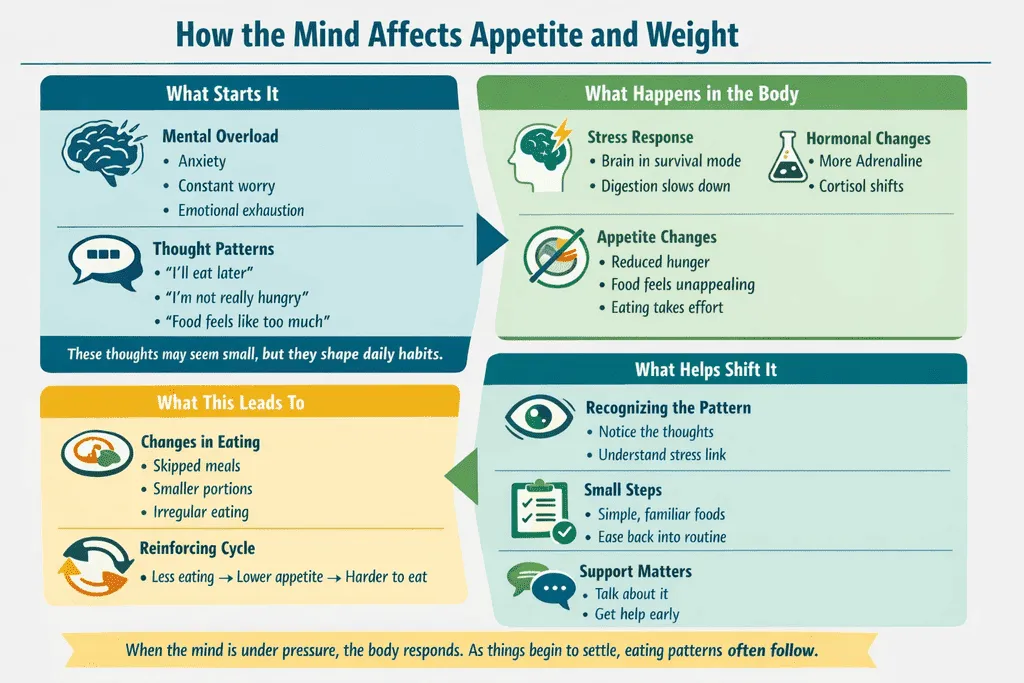
Research shows that anxiety and ongoing stress can change how the brain and body respond to food, with negative thought patterns as a contributing factor to changes in appetite and weight. When the brain is focused on threat or constant worry, areas linked to fear become more active, while normal hunger signals can become less noticeable or delayed.
This is where thoughts start to matter more than they seem. Repeated thoughts like “I’m not hungry,” “I’ll eat later,” or “I can’t deal with food right now” are not just habits – they reflect how the body is responding to stress. At the same time, stress hormones such as cortisol and adrenaline can reduce appetite and interfere with digestion, making eating feel uncomfortable or unappealing.
Over time, this creates a pattern. Eating becomes irregular, portions get smaller, and the body begins to adjust to less food. Weight loss can follow, even when there was no intention to lose weight.
Understanding this link helps make sense of what is happening. As mental pressure begins to ease, many people notice that appetite slowly returns and eating starts to feel more natural again.
Mental Health Support with Nurseline Community Services
Anxiety and eating difficulties often go hand in hand, quietly affecting your routines, physical and mental well-being and day-to-day life.
At Nurseline Community Services, support begins by really getting to know you as a person. Taking time to understand how life has been feeling day to day helps make sense of your overall mental health – whether that’s anxiety, low mood, or feeling overwhelmed.
Our care approach includes:
- Mental health nurses offer support in difficult moments, helping people make sense of anxiety and overwhelming thoughts that can impact eating.
- Positive Behaviour Support (PBS) identifies people’s strengths and skills and supports further healing and growth.
- Occupational therapy helps rebuild gentle, realistic routines around meals and everyday life.
- Trauma-informed support recognises how past experiences can shape feelings around food and safety.
- Multimedia support uses simple, personalised tools to help people express what’s hard to say and find new ways to cope.
- Recovery-focused support means consistent, understanding support over time, helping rebuild a more settled relationship with food.
When anxiety starts to affect eating, the right support can make things feel more manageable again. A personalised assessment helps understand what’s really going on, followed by care that fits around the person – not the other way around.
Get in touch with us today!