

Key Takeaways:
- DMDD is diagnosed in children and young people aged 6–18, with symptoms beginning before age 10.
- Outbursts typically occur three or more times a week, with an irritable or angry mood present between them.
- Symptoms must persist for 12 months or longer and be present across more than one setting, such as home, school or with peers.
- UK-specific prevalence figures remain limited. International research estimates DMDD in around 0.8–3.3% of children and young people when diagnostic criteria are applied, while a recent meta-analysis estimated 3.3% across community samples.
- DMDD frequently occurs alongside other mental health or neurodevelopmental conditions. Research has found particularly high levels of ADHD, anxiety and depressive disorders among children meeting DMDD criteria.
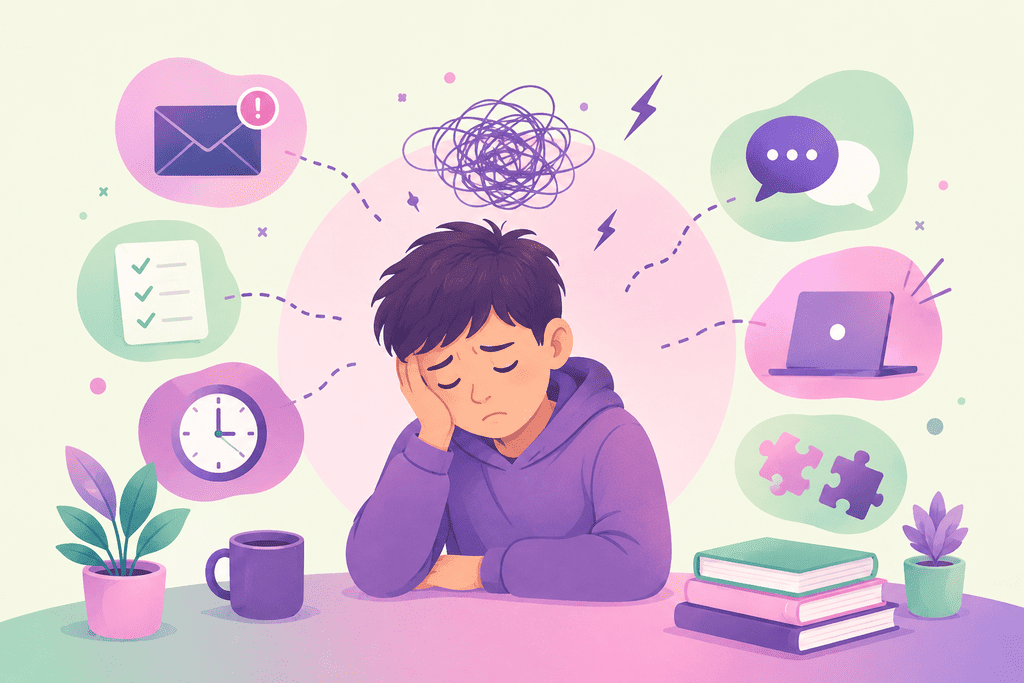
Some children seem to spend much of the day already close to their emotional limit. Frustration builds quickly, anger can be difficult to control, and even after an outburst ends, the irritability may not.
With Disruptive Mood Dysregulation Disorder (DMDD), these difficulties are persistent enough to interfere with school, relationships and family life. They can also leave a child feeling misunderstood and families unsure how best to respond.
Knowing how DMDD presents – and what can contribute to it – is an important first step towards finding support that works for the individual child.
Supporting a child with DMDD can bring questions that are difficult to answer from clinical information alone. Drawing on our experience of supporting children and young people with DMDD, this guide is for parents, carers and professionals who want to better understand their needs and provide support that can reduce distress, strengthen emotional regulation and improve quality of life.
What is Disruptive Mood Dysregulation Disorder (DMDD)?
Disruptive Mood Dysregulation Disorder (DMDD) is a childhood mental health condition that affects the way a child experiences and regulates mood, particularly anger, frustration and irritability. The difficulties are persistent and strong enough to affect everyday life, relationships and functioning across different settings.
Disruptive Mood Dysregulation Disorder (DMDD) was introduced in the DSM-5 in 2013, following concerns about children with persistent irritability being diagnosed with paediatric bipolar disorder. Research had shown an important difference: chronic irritability in childhood did not follow the same pattern as bipolar disorder, which involves distinct episodes of mania or hypomania. DMDD was created to describe children whose difficulties centre on ongoing irritability and repeated, intense emotional outbursts.
The UK picture is less straightforward. NHS services primarily work with the ICD classification system, and DMDD does not have a direct standalone equivalent within it. As a result, there is no reliable figure showing exactly how many children in the UK have DMDD. International studies have produced varying estimates, generally placing prevalence at around 1–3% of children, depending on the population studied and how diagnostic criteria were applied.
DMDD is also frequently diagnosed alongside ADHD, anxiety and depressive disorders, and some of its features can resemble difficulties seen in other mental health and neurodevelopmental conditions. Assessment therefore considers much more than the presence of anger or emotional outbursts, including how long the difficulties have been present, where they occur, their intensity and the effect they have on the child’s everyday life.

What Does DMDD Look Like in Everyday Life?
DMDD can change the rhythm of an entire day. Getting dressed for school, stopping a game, starting homework, sharing with a sibling or moving from one activity to another can become difficult when frustration rises faster than a child can manage it. Parents describe mornings that begin with conflict before anyone has left the house, calls from school after an outburst, and evenings spent carefully navigating demands because everyone is already tired.
And it isn’t always the outburst itself that has the greatest impact. Some children struggle with irritability throughout the day, while changes in routine can increase stress even when they enjoy the activity they are returning to. Families also describe the effect on siblings and the difficult balance between setting boundaries and recognising that a child may have very limited control once emotions have escalated.
In everyday life, this might look like:
- Morning: being asked to get dressed or leave for school develops into a prolonged argument or outburst.
- At school: frustration with a task leads to shouting, leaving the classroom, refusing work or, for some children, physical aggression.
- After school: a child who has managed through the school day becomes highly irritable once home.
- During transitions: stopping screen time, changing plans or returning to school after a break becomes particularly difficult.
- With siblings: an ordinary disagreement escalates quickly and takes much longer to settle.
- At bedtime: tiredness and another transition make routines, limits and requests harder to manage.
The same child may also be funny, affectionate, creative, engaged and settled at other times. DMDD does not describe their personality; it describes difficulties with mood regulation that can make certain parts of everyday life exceptionally hard.
Signs and Symptoms of Disruptive Mood Dysregulation Disorder (DMDD)
DMDD has two main features: severe emotional outbursts and ongoing irritability between them. A child may shout, argue, become physically aggressive or lose control when frustrated, but the pattern does not end when the outburst does. Irritability or anger is present for much of the day, on most days, and can be noticed by parents, teachers or other people around the child.
Unlike bipolar disorder, DMDD does not follow distinct mood cycles of mania, hypomania and depression. The irritability is chronic and non-episodic, although its intensity can change from one day or situation to another.
According to the Diagnostic and Statistical Manual of Mental Disorders (DSM-5/DSM-5-TR), clinicians look for a sustained pattern:
- 3 or more times a week: severe verbal or behavioural outbursts occur, on average, at least three times per week.
- Most of the day, nearly every day: an angry or irritable mood continues between outbursts.
- 12 months or longer: the overall pattern has been present for at least a year.
- No 3-month break: during that year, there has not been a period of three or more consecutive months without the symptoms.
- Across different parts of life: difficulties are present in at least two settings – home, school or with peers – and are severe in at least one.
- Before age 10: symptoms begin before the child turns 10. DMDD is diagnosed between the ages of 6 and 18.
The length and consistency of the pattern are particularly relevant during assessment. A difficult few weeks, an isolated period of emotional distress or occasional intense outbursts would not, by themselves, meet the diagnostic criteria for DMDD.
DMDD vs Normal Childhood Tantrums
Tantrums are a normal part of early childhood, particularly while children are still developing the language and emotional skills to manage frustration. They usually become less frequent and intense as children get older. With DMDD, the pattern is different: outbursts continue beyond the age when they would typically be expected, happen repeatedly and are accompanied by irritability or anger between episodes. The child may also take much longer to recover, and the difficulties begin to interfere with school, friendships and family life.
Frequent outbursts do not point automatically to DMDD. Anxiety disorders, ADHD, autism, trauma, depression and other difficulties can also affect emotional regulation or lead to behaviour that looks similar. For example, a child experiencing anxiety may become extremely distressed when faced with uncertainty, separation or a feared situation. Assessment looks at the pattern over time, what tends to trigger the reaction, the child’s mood between episodes and how the difficulties affect different areas of life.
Tantrum or DMDD? Look at the Pattern
| Typical Childhood Tantrum | DMDD | |
|---|---|---|
| Age | Most common in younger children | Symptoms begin before 10; diagnosis from age 6 |
| Frequency | Occasional and usually decreases with age | Severe outbursts average 3+ times per week |
| Between outbursts | Child generally returns to their usual mood | Irritability or anger remains for much of the day |
| Recovery | Usually settles once the frustration passes | Emotional distress may be harder to regulate and recover from |
| Duration over time | Often a developmental phase | Pattern continues for at least 12 months |
| Everyday impact | Usually limited | Can significantly affect home, school and relationships |
What Causes Disruptive Mood Dysregulation Disorder?
There is no single known cause of DMDD. Research suggests that biological, developmental and environmental factors may influence how a child processes frustration, responds to emotional events and returns to a calmer state. Studies have identified differences in areas such as attention to emotional information, responses to frustration and brain systems involved in regulating emotion, although these findings do not mean that a brain scan or biological test can diagnose DMDD.
Research into DMDD was strongly influenced by earlier studies of severe mood dysregulation (SMD) — a research diagnosis used to describe children with chronic irritability, heightened emotional reactivity and frequent outbursts. Long-term research into severe, chronic irritability found stronger links with later anxiety and depressive disorders than with classic bipolar disorder, findings that contributed to the development of DMDD as a separate diagnosis.
What Can Trigger an Outburst?
For children with DMDD, severe temper outbursts often happen when frustration builds faster than they can regulate it. Research into severe irritability has particularly linked emotional reactions with frustrative non-reward – situations where an expected reward, activity or goal is blocked. In everyday life, that could be losing a game, being unable to complete a task, being told “no” or having to stop something enjoyable. The trigger itself does not need to be unusual; what characterises DMDD is the intensity of the response in relation to the situation.
Common situations that may contribute to an outburst include:
- Being prevented from doing or getting something expected – particularly when plans or expectations change suddenly.
- Difficult tasks or repeated mistakes – schoolwork, games or everyday activities can become increasingly frustrating when something is not working.
- Transitions and demands – stopping screen time, getting ready for school, leaving the house or moving to the next activity.
- Interpersonal conflict – disagreements, teasing, perceived unfairness or difficulties with siblings and peers.
- Accumulated stress – several frustrations across the day may reduce a child’s ability to manage the next one.
- Individual factors – hunger, tiredness, sensory overload or anxiety may make regulation harder for some children, although these are not specific symptoms of DMDD.
An outburst can therefore make more sense when viewed in context: what happened beforehand, what the child expected, how frustration developed and what made regulation harder at that particular moment.
How Is DMDD Different From Oppositional Defiant Disorder?
DMDD and Oppositional Defiant Disorder (ODD) can look similar because both can involve irritability, anger and frequent conflict. The difference is where the main difficulty lies. DMDD symptoms centre on persistent mood dysregulation: severe temper outbursts alongside an angry or irritable mood that continues between them. ODD is defined more broadly by a pattern of angry or irritable mood, argumentative or defiant behaviour and vindictiveness. A child with ODD may repeatedly argue with adults, refuse requests, deliberately annoy others or blame others for mistakes, while these behaviours are not required for a DMDD diagnosis. The two diagnoses also have different thresholds: DMDD requires symptoms for at least 12 months, while ODD requires a pattern lasting at least six months. Under DSM-5-TR criteria, when a child meets the diagnostic criteria for both, DMDD takes precedence, and ODD is not diagnosed separately.
| DMDD | ODD |
|---|---|
| Persistent irritability + severe outbursts | Anger/irritability + defiant or argumentative behaviour |
| Outbursts average 3+ times per week | No equivalent 3-times-weekly requirement |
| Symptoms persist 12+ months | Symptoms persist 6+ months |
| Mood remains persistently irritable between outbursts | Persistent between-outburst irritability is not required |
| ODD is not additionally diagnosed when DMDD criteria are met | Can share several features with DMDD |
DMDD and Co-related Conditions
DMDD can occur alongside ADHD, anxiety, depression and other mental health or neurodevelopmental conditions. It can also share symptoms with other childhood disorders, particularly irritability, emotional outbursts and difficulties with attention or emotional regulation. This overlap can make diagnosis more complex, especially when a child is experiencing more than one condition at the same time. Identifying each area of difficulty can lead to more appropriate, individualised support.
DMDD and ADHD
Attention deficit hyperactivity disorder (ADHD) is one of the conditions most frequently reported with DMDD. A recent systematic review and meta-analysis identified ADHD, anxiety and depressive disorders as the most common co-occurring conditions in young people with DMDD. In one study of children aged 6–8 with ADHD, 21.8% also met criteria for DMDD. Both conditions can involve impulsive reactions and difficulty managing frustration, but ADHD is primarily characterised by inattention and/or hyperactivity-impulsivity, while DMDD involves persistent irritability and recurrent severe temper outbursts.
DMDD and Autism
Autistic children can also experience significant irritability and emotional outbursts, although this does not necessarily mean they have DMDD. One study examining DMDD symptoms rather than confirmed DMDD diagnoses found these symptoms in 43% of autistic school-age children, compared with 9% in the general-population sample. Meltdowns related to sensory overload, communication difficulties, uncertainty or changes in routine can resemble severe temper outbursts, making the context particularly important. DMDD is considered when persistent irritability and recurrent outbursts cannot be better explained by autism or another condition.
DMDD in the UK: Is it Commonly Diagnosed?
DMDD is not a commonly used standalone diagnosis in the UK, and reliable national figures on its diagnosis are difficult to find. The condition was introduced in the American DSM-5 in 2013, while NHS England currently uses ICD-10 as its mandated classification standard and is preparing for the transition to ICD-11. Neither system includes DMDD as the same standalone diagnosis found in the DSM-5.
A child may therefore experience persistent irritability, severe emotional outbursts and other associated symptoms without receiving a diagnosis called DMDD in UK services. Assessment may identify or consider other conditions that can involve similar difficulties, including ADHD, anxiety, depression and oppositional defiant disorder. This difference in diagnostic systems is also one reason UK-specific figures for DMDD are limited.
How Parents Can Support a Child With Severe Irritability
When irritability is already high, more demands, lengthy explanations or trying to reason through the problem in the middle of an outburst can add to the pressure. A calmer response, fewer words and time to regulate can be more useful in that moment. Outside difficult periods, parents can look for patterns — when outbursts happen, what happened beforehand, how sleep, hunger, school demands or changes in routine may be affecting the child, and what tends to make recovery easier.
Predictability can also reduce unnecessary frustration. Clear expectations, advance warning of changes, manageable choices and consistent responses give children more opportunities to practise coping with disappointment and change. This does not mean avoiding every trigger or removing boundaries. It means recognising when a child needs support to manage an emotion before expecting them to solve the problem that caused it.
Therapy and Specialist Support
Treatment for DMDD is usually tailored to the child and may draw on approaches used for irritability, ADHD, anxiety and behavioural difficulties. Cognitive behavioural therapy (CBT) can support children in recognising thoughts and feelings linked to frustration and developing ways to respond differently. Parent training can give families practical strategies for anticipating difficult situations, responding to severe outbursts and building more positive interactions.
But support starts much closer to home: knowing your own child. What overwhelms them, what helps them feel understood, when they need space, when they need reassurance and what makes it easier for them to regain control. Parents often notice these details long before anyone else does. Research is encouraging: psychological interventions that combine work with children and support for parents have been linked with reduced irritability and temper outbursts, as well as improvements in children’s overall functioning. Finding an approach that works for the individual child – first at home and then consistently across school and specialist support – can make a meaningful difference to everyday life.
Specialist Support with Nurseline Community Services
At Nurseline Community Services, we recognise that behaviour has a reason and can be a way of communicating something important – frustration, fear, discomfort, overwhelm, an unmet need or difficulty expressing what is happening. Instead of focusing only on stopping an outburst, we work to understand what the child or young person may be communicating and what is influencing their response.
Our Community Psychiatric Nurses (CPNs) work alongside PBS specialists and the wider multidisciplinary team to understand mental health needs, emotional regulation, patterns of distress and the factors affecting everyday wellbeing. Through Positive Behaviour Support (PBS), functional assessment and specialist mental health input, support can focus on strengthening communication and coping skills, adapting environments and giving families practical strategies that can be used consistently at home and in everyday life.
For more information on how we can support you, contact us today.
FAQ
Does DMDD go away with age?
DMDD symptoms can change as a child gets older, and severe temper outbursts often become less common by adolescence and adulthood. However, childhood chronic irritability has been associated with a greater risk of anxiety and depression later in life. Early, appropriate support can give children strategies for managing emotions and frustration as they develop.
What age does DMDD usually start?
For a DMDD diagnosis, symptoms must begin before the age of 10, although the condition cannot be diagnosed before age 6. Diagnosis is limited to children and young people between 6 and 18 years old. The difficulties must also have been present for at least 12 months.
Is DMDD a form of autism?
No. DMDD is not a form of autism. Autism is a neurodevelopmental condition, while DMDD is classified as a depressive disorder in the DSM-5-TR. Autistic children can experience irritability, distress and intense emotional reactions that may resemble DMDD symptoms, and some may meet criteria for both conditions following careful assessment.
Is DMDD a form of bipolar disorder?
No. DMDD is not a form of bipolar disorder. In fact, DMDD was introduced partly because children with severe, persistent irritability were sometimes being diagnosed with paediatric bipolar disorder. A key difference is that bipolar disorder involves distinct episodes of mania or hypomania, whereas the irritability associated with DMDD is persistent rather than episodic.