

Key Takeaways
- ADHD-related anger is driven by emotional dysregulation, causing emotions to escalate more quickly and intensely than expected.
- Common triggers include frustration, sensory overload, unexpected changes, criticism and rejection sensitivity.
- Without the right support, ADHD anger can affect relationships, education, employment and overall mental wellbeing.
- ADHD-informed therapy, emotional regulation strategies, physical activity and appropriate treatment can help people manage anger more effectively.
This article explores the link between ADHD and anger, explaining why emotional reactions can feel overwhelming and how they can be managed more effectively. It is written for people with ADHD, families, carers, educators, employers and healthcare professionals looking for practical, evidence-based guidance.
The Link Between ADHD and Anger
For most adults with ADHD, managing emotions can be just as challenging as managing attention, with emotional dysregulation affecting around 70% of people.
Attention Deficit Hyperactivity Disorder (ADHD) affects the brain systems responsible for emotional regulation, making it more difficult to adjust the intensity of emotional responses once they have been triggered. This increased emotional reactivity, combined with reduced inhibitory control, can cause frustration, disappointment or perceived rejection to escalate rapidly, often before reflective thinking has time to influence the response.
Many people with ADHD experience anger differently because emotional regulation works differently. Instead of emotions building gradually, frustration, disappointment, or perceived rejection can intensify rapidly, making it harder to pause before reacting. These responses are linked to differences in emotional processing and inhibitory control rather than a lack of self-awareness or motivation.
Several factors can contribute to ADHD-related anger, including:
- Impulsivity – reduced inhibitory control can make it difficult to pause before responding emotionally.
- Sensory overload – busy environments, loud noise, strong smells or prolonged stress can overwhelm the brain and increase emotional reactivity.
- Rejection sensitivity – criticism, conflict or perceived disapproval may trigger intense emotional responses, even when no harm was intended.
- Everyday ADHD challenges – repeated difficulties with attention, organisation, time management or completing tasks can lead to accumulated frustration over time.
One way to understand ADHD-related anger is to think of emotional regulation as a volume control rather than an on-and-off switch. For many people with ADHD, emotional reactions can become amplified more quickly, while the brain takes longer to reduce their intensity. This helps explain why anger may feel sudden or overwhelming, even when the trigger appears relatively minor.
Is Anger a Symptom of ADHD?
Anger is not a core symptom of ADHD, but ADHD and anger issues are common because ADHD influences the way emotions are experienced and regulated. Many people with ADHD experience intense emotions, meaning emotional responses can develop quickly and feel more powerful before there is an opportunity to pause and process what is happening. This is why frustration, irritation or anger may appear more suddenly than expected, even in situations that seem minor to other people.
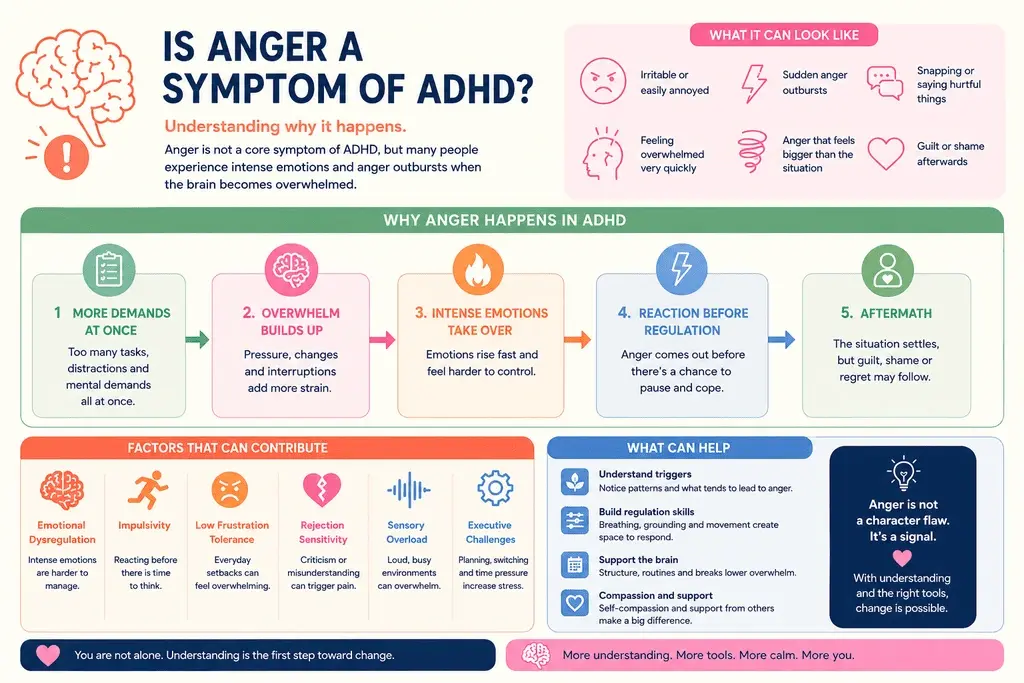
Rather than being caused by a single event, anger is often the result of several demands building up at the same time. Trying to stay focused, managing distractions, coping with sensory input, changing plans unexpectedly, completing demanding tasks or responding to criticism can all require significant mental effort. When these demands accumulate, emotions can become harder to regulate, making anger a natural response to feeling overwhelmed rather than a deliberate choice or personality trait.
Several factors may contribute to ADHD and anger issues:
- Emotional dysregulation – emotions can feel intense and may take longer to settle.
- Impulsivity – reactions may happen before there is time to think through the situation.
- Low frustration tolerance – repeated interruptions, delays or obstacles can quickly increase emotional stress.
- Rejection sensitivity – criticism or feeling misunderstood may trigger strong emotional reactions.
- Sensory overload – busy, noisy or unpredictable environments can increase emotional overwhelm and make regulating emotions more difficult.
Although anger is not part of the ADHD diagnostic criteria, emotional regulation is increasingly recognised as an important aspect of the ADHD experience. Understanding why these reactions happen helps replace judgement with understanding and makes it easier to develop practical strategies that support emotional regulation and overall wellbeing.
Emotional Dysregulation and ADHD
Many people think ADHD is mainly about attention and hyperactivity, but for many people, the hardest part is managing emotions. Emotional dysregulation affects an estimated 50–70% of adults with ADHD, making everyday frustrations feel far bigger than they appear from the outside. A minor disagreement, an unexpected change of plans or feeling criticised can trigger emotional outbursts that happen so quickly there is little time to pause or think before reacting. This isn’t because someone is “overreacting” or lacks self-control.
Research suggests the ADHD brain processes and regulates emotions differently, with changes in the networks responsible for executive functioning, emotional inhibition and impulse control. As a result, emotions can feel more intense, arrive more suddenly and take longer to settle. Many people with ADHD describe feeling overwhelmed by their own reactions and regretting what they said or did once the emotional intensity has passed, which is why understanding emotional dysregulation is an important part of understanding ADHD itself.
Difference between ADHD and ‘Normal’ Anger
Feeling angry is a normal part of being human. The difference is not whether someone with ADHD gets angry, but how quickly the emotion builds, how intensely it is experienced, and how difficult it can be to regulate in the moment. For most people, anger develops gradually, leaving enough time to think, put the situation into perspective and choose how to respond. For many people with ADHD, that pause can be much shorter.
Frustration, sensory overload, interruptions or feeling criticised may trigger a rapid emotional response before the brain has fully processed the situation. Once the emotion settles, many people recognise that their reaction was stronger than they intended and may feel guilt, embarrassment or regret.
Key differences include:
- Speed of reaction: Typical anger often builds gradually, while ADHD-related anger can escalate within seconds.
- Emotional intensity: The trigger may seem small to others, but the emotional response can feel disproportionately strong because emotions are experienced more intensely.
- Impulse control: ADHD affects executive functioning, making it harder to stop, think and choose a response before speaking or acting.
- Recovery time: Once the situation has passed, many people without ADHD return to their emotional baseline relatively quickly. People with ADHD may need much longer to calm down, even after they know the situation is over.
- Regret after an outburst: Many people with ADHD report feeling guilty, embarrassed or confused by the intensity of their own reaction because it often doesn’t reflect how they truly feel once the emotion settles.
This doesn’t mean people with ADHD are angrier than everyone else. Instead, research suggests they often experience differences in emotional regulation, meaning emotions rise faster, feel more intense and take longer to return to baseline. Understanding this distinction helps reduce stigma and shifts the conversation away from blame towards recognising ADHD-related emotional dysregulation and developing strategies that make emotional responses easier to manage over time.
Signs Your Anger Is Linked to ADHD
Not everyone who has ADHD experiences anger in the same way, but many people notice that their emotional reactions feel faster, stronger and harder to control than expected.
Many people with ADHD notice that their anger feels different from typical frustration. A disagreement, unexpected change or minor inconvenience can trigger an emotional reaction that feels immediate and far more intense than the situation would normally warrant. Although the trigger may appear small, it often comes after the brain has already been working hard to manage distractions, regulate emotions, cope with sensory input or deal with executive functioning demands. Once anger takes over, calming down can be challenging, even after the situation has ended.
Some of the most common ADHD symptoms include:
- Anger escalates very quickly, leaving little time to think before reacting.
- The emotional response feels stronger than the trigger itself.
- It takes longer than expected to calm down or return to your usual emotional state.
- Frustration tolerance is lower, especially when plans change, tasks become difficult or you are interrupted.
- Sensory overload, mental fatigue or emotional exhaustion make anger more likely.
- Boredom or understimulation can increase irritability and emotional tension.
- You often regret your reaction once the emotion has passed.
Many people also notice that these reactions follow a recognisable pattern. Anger is more likely to appear after feeling overwhelmed, mentally exhausted, frustrated or bored, rather than during calm periods. Recognising these recurring triggers can help identify the early warning signs before emotions become overwhelming and make it easier to develop strategies that support emotional regulation.
How Long Does ADHD Rage Last?
There is no set duration for an ADHD anger episode. For some people, intense anger lasts only a few minutes, while for others it can take hours to fully settle. Although the initial emotional outburst may pass quickly, the brain often needs much longer to return to its usual state, making it difficult to think clearly, communicate calmly or let go of the triggering event.
Factors such as emotional dysregulation, stress, sensory overload, sleep deprivation and ADHD burnout can all prolong recovery. Many people also experience feelings of guilt, embarrassment or emotional exhaustion after an episode, even once the anger itself has subsided.
Common ADHD Anger Triggers
Anger in ADHD is often triggered by situations that place extra demands on emotional regulation, attention or executive functioning. While triggers vary from person to person, recognising the situations that repeatedly lead to frustration or emotional overload can help identify patterns and reduce the likelihood of future outbursts.
Sensory Overload
Many people with ADHD find it difficult to filter sensory information, meaning the brain continues processing sounds, lights, movement, conversations or other environmental stimuli all at once. As sensory input builds, the brain has fewer resources available to regulate emotions, making frustration and irritability more likely. In busy, noisy or unpredictable environments, even a small additional stressor can feel overwhelming and contribute to an anger outburst.
Executive Fatigue
Executive fatigue develops when the brain has spent long periods planning, organising, making decisions, managing attention and controlling impulses. By the end of the day – or after completing mentally demanding tasks – emotional regulation often becomes much harder. At this point, even minor inconveniences, interruptions or unexpected changes may trigger a stronger emotional reaction because the brain has fewer cognitive resources left to cope effectively.
Transitions and Interruptions
Many people with ADHD rely on routine, predictability or periods of hyperfocus to stay engaged and complete tasks. When plans suddenly change or someone interrupts them while they are deeply focused, the brain has to switch attention quickly – something that can be particularly difficult with ADHD. This abrupt shift often creates immediate frustration, making a person more likely to respond with irritability or anger before they have had time to process the change.
Chronic Frustration
Living with ADHD often means dealing with a series of small but persistent challenges throughout the day, such as misplacing belongings, forgetting appointments, struggling to stay organised or needing extra time to complete everyday tasks. While each setback may seem minor on its own, its cumulative effect can create a constant baseline of stress and frustration. As emotional pressure builds, tolerance for additional challenges becomes lower, making even a small inconvenience more likely to trigger an anger outburst.
Difference between ADHD Anger in Children and Adults
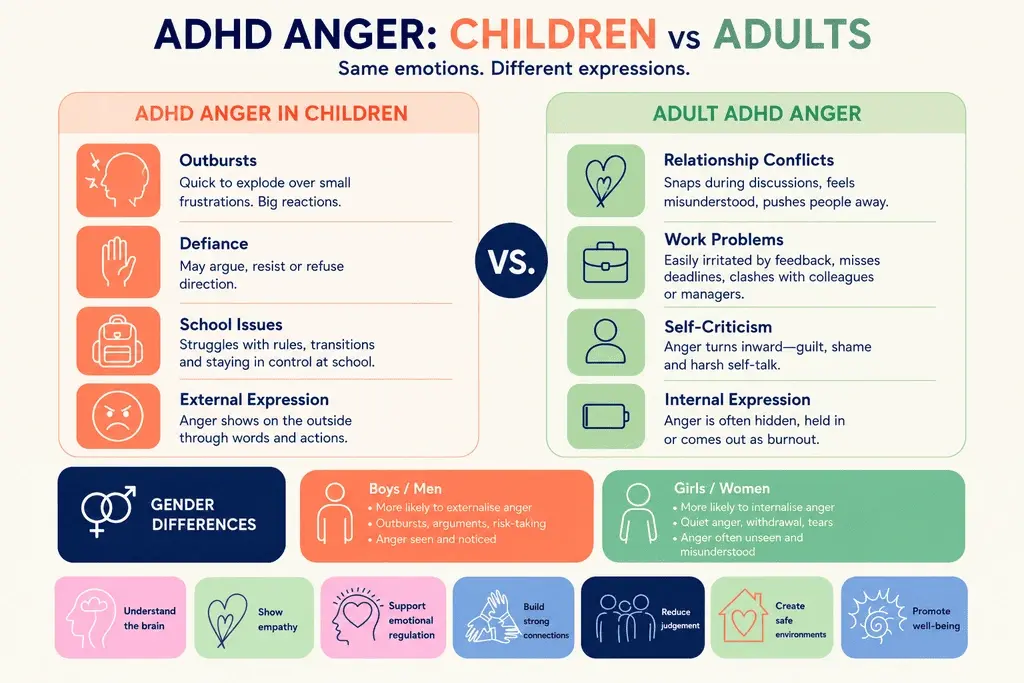
Although the underlying difficulty is the same – difficulty regulating intense emotions – ADHD anger often looks very different depending on a person’s age. Children are more likely to express anger outwardly through behaviour, while adults often experience a combination of outward reactions and internal emotional distress. As responsibilities, relationships and social expectations increase with age, ADHD anger tends to become less visible but often more emotionally exhausting.
How ADHD Anger Looks in Children
Children with ADHD usually struggle to pause before reacting. Because the parts of the brain involved in impulse control and emotional regulation are still developing, frustration can quickly turn into an emotional outburst.
Common signs of ADHD child anger include:
- Frequent temper outbursts over seemingly small problems
- Defiant or argumentative behaviour when overwhelmed
- Difficulty coping with changes in routine or transitions
- Emotional meltdowns after sensory overload or mental fatigue
- School difficulties, including conflicts with teachers or classmates, refusing tasks, or leaving the classroom when frustrated
In many cases, these behaviours are misunderstood as “bad behaviour” when they are actually signs that the child has exceeded their ability to regulate emotions.
How ADHD Anger Looks in Adults
Adults with ADHD are often expected to hide their emotions, so anger may become less explosive but more complicated. Some people still experience sudden outbursts, while others suppress their emotions until they eventually reach a breaking point.
Common signs of adult ADHD anger include:
- Relationship conflicts caused by impulsive reactions or irritability
- Becoming unusually frustrated by criticism or perceived rejection
- Workplace difficulties, such as snapping under pressure, struggling with feedback, or conflict with colleagues
- Internalising anger as guilt, shame or harsh self-criticism
- Emotional exhaustion after repeatedly trying to stay calm throughout the day
Many adults describe feeling as though they spend all day holding emotions together, only to lose control once they reach home or when their mental energy is depleted.
Gender Differences in ADHD Anger
Research suggests that ADHD anger may present differently across genders, although individual experiences vary considerably.
- Boys and men are generally more likely to externalise anger through arguing, shouting, impulsive behaviour or physical restlessness. Because these behaviours are more visible, ADHD is often recognised earlier.
- Girls and women are more likely to internalise anger. Instead of outward outbursts, anger may appear as anxiety, withdrawal, crying, people-pleasing, perfectionism or persistent self-criticism. As a result, ADHD may go unnoticed until adolescence or adulthood.
These differences are influenced not only by biology but also by social expectations about how boys and girls are “supposed” to express emotions. Regardless of age or gender, ADHD anger is not simply a problem with temper – it reflects differences in how the brain regulates emotions, processes stress and recovers from overwhelm.
When Anger May Indicate a Co-occurring Condition
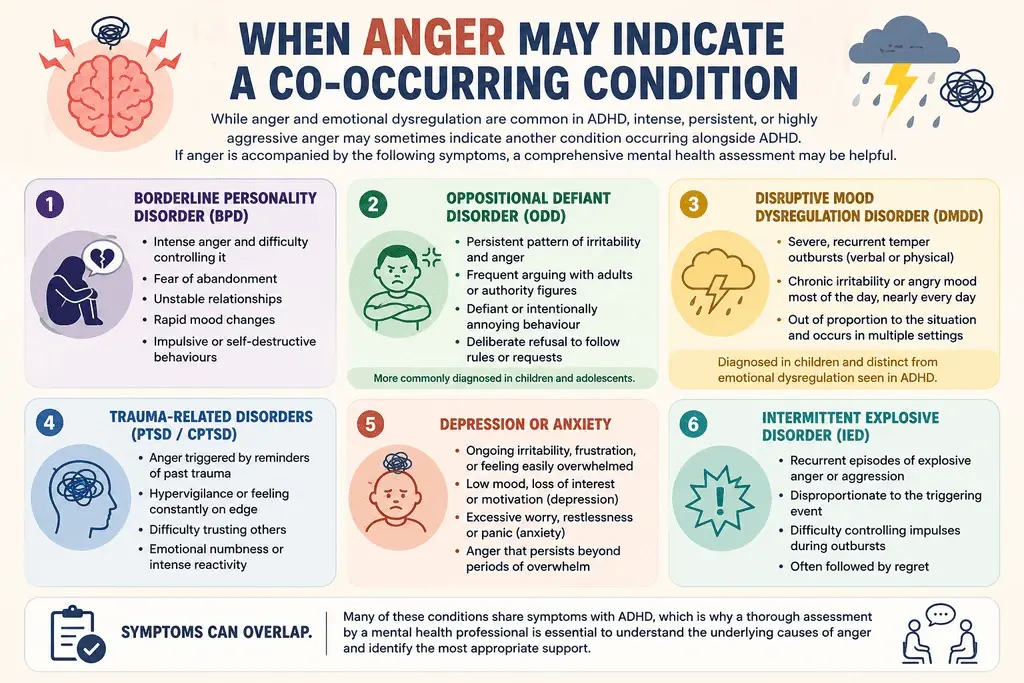
While anger and emotional dysregulation are common in ADHD, intense, persistent, or highly aggressive anger may sometimes indicate another condition occurring alongside ADHD. If anger is accompanied by the following symptoms, a comprehensive mental health assessment may be helpful:
- Borderline Personality Disorder (BPD): Intense anger alongside fear of abandonment, unstable relationships, rapid mood changes, and impulsive behaviours.
- Oppositional Defiant Disorder (ODD): A persistent pattern of irritability, frequent arguments with authority figures, defiant behaviour, and deliberately refusing to follow rules. ODD is more commonly diagnosed in children and adolescents.
- Disruptive Mood Dysregulation Disorder (DMDD): Severe, recurrent temper outbursts together with chronic irritability between outbursts. DMDD is diagnosed in children and is distinct from the emotional dysregulation typically seen in ADHD.
- Trauma-Related Disorders (PTSD/CPTSD): Anger triggered by reminders of past trauma, hypervigilance, or feeling constantly on edge.
- Depression or Anxiety: Ongoing irritability, frustration, and low tolerance for stress, particularly when symptoms persist beyond periods of overwhelm.
- Intermittent Explosive Disorder (IED): Recurrent episodes of explosive anger or aggression that are significantly out of proportion to the triggering event.
Many of these conditions can overlap with ADHD, which is why a thorough assessment is important to understand the underlying causes of anger and identify the most appropriate support.
How to Support Someone With ADHD and Anger
Supporting someone with ADHD and anger starts with understanding that the anger is often a response to emotional overload, not a lack of care or respect. Small changes in how others respond can help de-escalate situations and reduce future conflict.
- Stay calm during an outburst. Matching anger with anger usually makes the situation worse.
- Give space when emotions are high. Problem-solving is far more effective once the person has had time to regulate.
- Recognise common triggers. Fatigue, sensory overload, interruptions, frustration and rejection can quickly increase emotional intensity.
- Challenge negative thought patterns. Many people with ADHD experience automatic thoughts such as “I always mess things up” or “Everyone is judging me,” which can amplify anger and make it harder to recover emotionally.
- Focus on solutions, not blame. Discuss what happened, identify triggers, and agree on strategies that may help next time.
- Encourage professional support if anger is persistent. ADHD coaching, psychological therapies and, where appropriate, medication can improve emotional regulation alongside ADHD symptoms.
Supporting someone with ADHD is not about avoiding conflict altogether. It is about creating an environment where emotions can settle safely, communication remains respectful, and negative thought patterns are gradually replaced with healthier, more balanced ways of responding.
Mental Health Support with Nurseline Community Services
ADHD-related anger can affect relationships, work, education and overall wellbeing, particularly when emotional outbursts become part of an ongoing cycle of frustration, guilt and negative thought patterns. At Nurseline Community Services, we provide personalised, trauma-informed mental health support that helps people understand their emotional triggers, strengthen emotional regulation and develop practical coping strategies that can be applied in everyday situations. Our nurse-led multidisciplinary teams work alongside each person to build confidence, stability and long-term independence, rather than simply responding to moments of crisis.
Whether someone needs support to manage overwhelming emotions, prevent escalation or regain stability after a difficult period, our approach is tailored to their individual strengths, goals and needs. By combining compassionate community-based support with evidence-based practice, we help people build healthier coping strategies, reduce the likelihood of future crises and move towards a more independent and fulfilling life.
For more information on how we can support you, contact us today.