

Key Takeaways
- ODD affects around 3.6% of children and young people, making it one of the more commonly recognised disruptive behaviour diagnoses in childhood.
- Boys are diagnosed around 1.4 times more often than girls, although this difference becomes smaller after puberty.
- Rates can be substantially higher among children who have experienced significant adversity. Studies involving children in foster care have reported ODD rates as high as 29%, highlighting the importance of considering a child’s experiences and environment alongside their symptoms.
- ODD often overlaps with other needs. ADHD is particularly common, with research estimating that around 30–50% of children with ADHD also meet criteria for ODD.
- Childhood ODD can have longer-term implications, including an increased likelihood of later anxiety, depression and substance-use difficulties for some children. This makes early assessment and appropriate support important – both for difficulties happening now and for the child’s longer-term wellbeing.
Oppositional Defiant Disorder (ODD) affects around 3% of children and is more common in younger children, particularly those aged 8 and under. There is no single cause – genetics, emotional regulation, a child’s environment and difficult or stressful experiences may all play a part.
For families, however, ODD can feel much bigger than a diagnosis. Repeated arguments, anger and resistance can affect home life, school, relationships and, for some families, lead to involvement from mental health, social care or local authority services. NICE recognises that parents can feel blamed or judged when seeking support – something that can make an already difficult situation even harder.
So instead of asking, “Why won’t this child behave?”, perhaps the more useful questions are: What is driving the behaviour? What is the child trying to communicate? And what might help them feel more understood and supported?
Let’s explore.
What is Oppositional Defiant Disorder (ODD)?
Oppositional Defiant Disorder (ODD) describes a persistent pattern of anger, irritability, frequent disagreements and difficulty with requests or expectations. These experiences go beyond the occasional frustration or resistance that is a natural part of growing up and can make everyday life more difficult for the child and the people around them.
ODD is not the same as conduct disorder, although the two can share some characteristics and are sometimes discussed together when looking at behavioural and emotional difficulties in children and young people.
Oppositional defiant disorder symptoms can look different for every child, and it often co-occurs with other mental health and neurodevelopmental differences. ODD is particularly common among children with Attention-Deficit/Hyperactivity Disorder (ADHD), a neurodevelopmental difference that can affect attention, activity levels and impulse control. Research suggests that around 30–50% of children with ADHD may also meet the criteria for ODD. Understanding where experiences overlap – and where they differ – can help families and professionals look beyond the behaviour and better understand what each child may need.
Difference Between ODD and Typical Childhood Defiance
Saying “no”, arguing, becoming angry or pushing against boundaries can all be part of growing up. Children may also show more resistance when they are tired, overwhelmed, going through change or dealing with something difficult. ODD is not identified because a child argues or refuses to do something. What matters is whether there is an ongoing pattern that is noticeably different from what would usually be expected for their age and developmental level.
Professionals therefore look beyond individual moments and consider the wider pattern:
- Duration: the pattern has been present for at least six months.
- Frequency: it happens considerably more often than would typically be expected at that developmental stage. For diagnostic purposes, frequency is also considered differently depending on the child’s age.
- Intensity: reactions may be stronger and harder for the child to move through than everyday disagreements or frustration.
- Impact: the difficulties begin to affect important parts of life, such as family relationships, friendships or education.
- Context: professionals consider what is happening around the child, including their experiences at home and school, relationships, communication, emotional wellbeing and neurodevelopmental differences such as ADHD or autism.
| Typical Childhood Defiance | Oppositional Defiant Disorder (ODD) |
|---|---|
| Usually happens occasionally or during particular developmental stages. | Forms a persistent pattern lasting at least six months. |
| May become stronger when a child is tired, hungry, overwhelmed or experiencing change. | Anger, irritability, arguments, or resistance happen more frequently than expected for the child’s age and developmental level. |
| Often relates to a particular situation and may settle as circumstances change. | The pattern continues over time, although its intensity can vary. |
| Usually has a limited or temporary impact on everyday life. | Can significantly affect family life, friendships, education and relationships. |
| Disagreements and pushing against boundaries are generally within the expected range for the child’s developmental stage. | The frequency and intensity of difficulties go beyond what is typically expected developmentally. |
And there is an important detail that can easily be missed: a child does not have to struggle in every environment for those difficulties to matter. ODD can be limited to one setting, particularly in milder presentations. So when a child appears to cope at school but experiences intense difficulties at home, this should not automatically be dismissed as “just behaving badly for their parents”. The question is not simply what did the child do? But how often is this happening, what is happening around them, and how is it affecting their everyday life?
Difference Between ODD and Challenging Behaviour
Challenging behaviour is not a diagnosis. It is a broad term used to describe behaviour that may place a person or others at risk, or significantly affect everyday life and access to the community. It can have many reasons behind it, including unmet needs, difficulty communicating, pain, sensory overwhelm, anxiety, changes in routine or an environment that does not meet the person’s needs. ODD, on the other hand, is a recognised diagnosis with specific criteria, including a persistent pattern of anger or irritability, frequent arguments or resistance, or vindictive behaviour lasting at least six months.
This distinction matters because similar behaviour can have very different reasons behind it. A child refusing a request, shouting or becoming distressed should not automatically be described as having ODD. Understanding what happened before the behaviour, what the child may be communicating and what changes around them could help is an important part of identifying the right support.
Signs and Symptoms of Oppositional Defiant Disorder (ODD)
A child may become upset very quickly, remain angry long after a disagreement has ended, or experience everyday requests as particularly difficult. Another important detail is that children themselves may not see their responses as unreasonable and may feel that they are reacting to unfair expectations or demands. This can be important for families to understand, as the same situation may feel very different from the child’s perspective.
Emotional Signs
A child may:
- Lose their temper frequently
- Angry and irritable mood
- Experience frequent anger or resentment
- Feel particularly sensitive to being corrected or challenged
- Have difficulty moving on after conflict or frustration
Behavioural Signs
A child may:
- Frequently challenge or question requests and rules
- Become involved in repeated arguments with adults
- Resist doing something they have been asked to do
- Blame others when something has gone wrong
- Deliberately annoy or provoke others
- Act spitefully or seek to “get back” at someone after feeling hurt or wronged
What can sometimes be interpreted as a child “wanting to win” an argument may actually be a situation in which they genuinely feel misunderstood, treated unfairly or unable to let the conflict go. That distinction does not remove the difficulties the behaviour can create, but it can help adults respond with curiosity and support instead of assuming negative intent.
What Causes Oppositional Defiant Disorder?
Many factors may play a role in a child developing oppositional defiant disorder. Research increasingly points to an interaction between genetic influences, a child’s individual characteristics, emotional regulation and their experiences and environment. Genetic influence appears substantial – estimates of heritability are around 50% – while environmental and social experiences can influence how difficulties develop and persist.
Family circumstances form one part of this much bigger picture. Research has linked inconsistent discipline and harsh parenting approaches with a higher likelihood of ODD symptoms, while lower socioeconomic status has also been associated with higher prevalence. Importantly, the relationship can work in both directions: a child experiencing frequent difficulties with anger and resistance can place considerable pressure on parents, while increasingly strict responses can intensify conflict, creating a cycle that becomes difficult for everyone to break. A large systematic review also suggests that socioeconomic disadvantage may influence children indirectly, through pressures such as family stress, conflict and fewer available resources.
It’s important to highlight that these findings describe risk and interaction, not parental blame or a simple cause-and-effect relationship.
Risk Factors for Developing ODD
ODD appears to develop through a complex interaction of genetic, developmental, family and wider environmental influences. No individual risk factor can predict whether a child will develop ODD, and many children exposed to these circumstances never do. Research increasingly looks at how several influences can build on one another over time.
Factors associated with a greater likelihood of ODD or ODD symptoms include:
- Genetic influences – research suggests a substantial genetic contribution, with some genetic influences shared with ADHD and other difficulties involving emotional and behavioural regulation.
- Experiences during pregnancy – maternal smoking during pregnancy has been associated with a higher likelihood of ODD in some studies, although research suggests that genetics and other family factors may explain part of this association.
- Parental substance misuse – alcohol and drug misuse within the family has been identified among environmental factors associated with ODD, although the relationship is complex and may involve several overlapping influences.
- Family instability and ongoing stress – experiences including family conflict, separation, changes in caregivers and socioeconomic pressures have been associated with a greater likelihood of ODD symptoms. Importantly, these circumstances describe risk, never blame.
There is also a longer-term reason why early understanding and support matter. ODD in childhood has been associated with difficulties extending into adolescence and adulthood, including mental health and substance-use problems. However, the relationship with later substance use is influenced by factors such as co-occurring ADHD, so it is more accurate to describe this as an increased vulnerability rather than an expected outcome.
Family and Social Influences
Every child grows within a network of relationships, experiences and circumstances that can influence their emotional development. With ODD, research points to an interplay between genetic and environmental factors, and some children have a family history of mental health difficulties. Family stress, financial pressures, difficult experiences and the support available around the child may also play a part. None of these factors tells the whole story on its own – understanding them can give families and professionals a fuller picture of what a child has experienced and where additional support may make a difference.
Co-Occurring Neurodevelopmental Conditions
ODD can occur alongside neurodevelopmental differences such as ADHD and autism, as well as learning disabilities. Some children also experience anxiety or depression, making it especially important to understand their needs as a whole instead of viewing every difficulty through ODD alone.
For autistic children, a PDA (Pathological Demand Avoidance) profile may also be considered. PDA is not a separate diagnosis, but describes a pattern where everyday demands can feel difficult to manage and create a strong need for autonomy. From the outside, this can sometimes look similar to ODD, which is why understanding what the child is experiencing can be so important.
There can also be similarities with disruptive mood dysregulation disorder (DMDD), particularly frequent temper outbursts and irritability.A key distinction is that with DMDD, irritability or anger remains present between outbursts, while ODD can involve a broader pattern of anger, arguments and resistance. Carefully identifying these overlapping experiences can make a meaningful difference to the support a child receives.
Mental Health Conditions
Some children with ODD also experience anxiety disorders, depression and difficulties with emotional regulation, which can add another layer to what they are already managing. Research has found that children with ODD have a higher risk of developing depression, particularly as they grow older, with persistent irritability appearing to be especially relevant to later emotional difficulties. Recognising anxiety, low mood or emotional distress alongside ODD can help ensure that support responds to how the child is feeling as well as what others can see in their behaviour.
Treatment and Support for Oppositional Defiant Disorder
Treatment for ODD often works best when the child and the adults around them receive support together. Depending on age and individual needs, this may include parent management training (PMT), cognitive behavioural therapy (CBT), family therapy, problem-solving and social skills training. Medication is generally used for co-occurring needs such as ADHD, anxiety or depression, rather than ODD itself. When several needs overlap, treatment may involve different professionals and approaches working together.
An important part of support happens between appointments, in everyday moments – getting ready for school, responding to a change of plan, recovering after a difficult interaction or finding a way to communicate when emotions are high. When families need additional support during these moments, our team can work alongside the child, their family and the wider professional team at home and in the community, with support from positive behaviour support specialists and community psychiatric nurses.
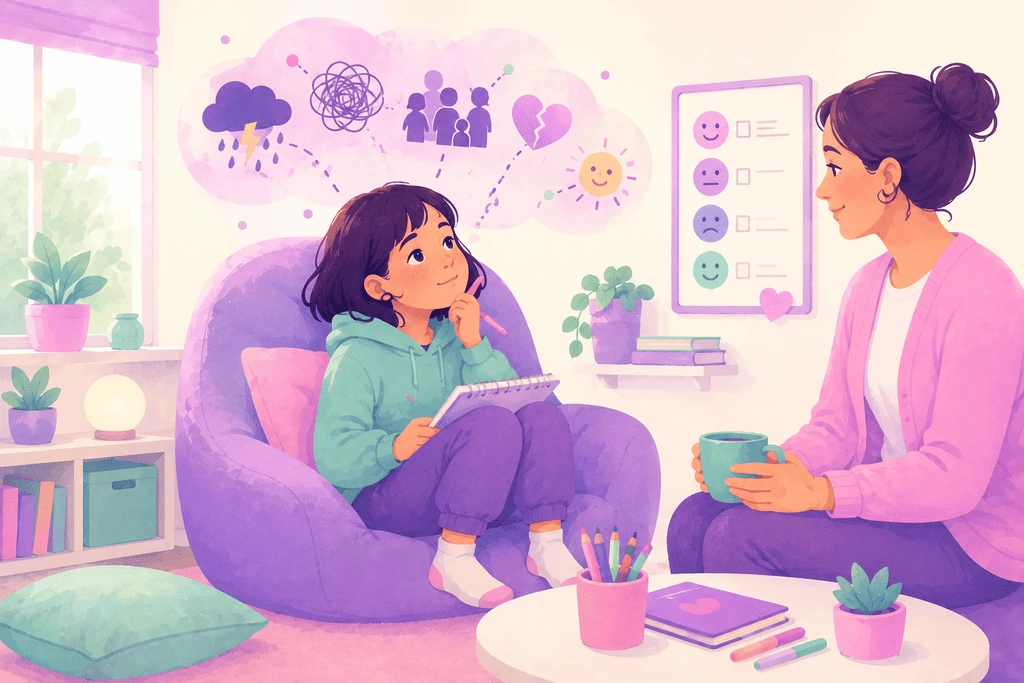
Supporting a Child with ODD at Home
Home can be where some of the strongest emotions and most difficult moments happen. Clear communication, consistent support and Positive Behaviour Support (PBS) can make everyday life more manageable, while children and families facing more complex situations may benefit from person-centred care at home and community-based support tailored to their individual needs.
Building Positive Relationships
A strong relationship can make difficult moments easier to navigate. Making time for the child’s interests, noticing their efforts, listening to their perspective and offering meaningful choices can build trust and reduce interactions that become centred around correction or conflict. Positive Behaviour Support (PBS) can also help families understand what strengthens connection and makes communication easier for the individual child.
Managing Challenging Behaviour
During a difficult moment, reduce demands, keep instructions short and avoid turning the situation into an argument. Give the child time and space to respond, offer two realistic choices where possible, and return to the conversation once emotions have settled. Keeping a simple record of what happened before and after repeated situations can also reveal patterns – a particular request, transition, time of day or interaction may regularly make things harder. If situations are becoming frequent, intense or unsafe, specialist crisis community support can help identify what needs to change and develop strategies around the individual child.
Encouraging Emotional Regulation
Emotional regulation can start with helping a child notice what happens in their body before emotions become overwhelming – a faster heartbeat, tense muscles, feeling hot or wanting to leave, for example. Parents can then explore strategies together, such as movement, sensory activities, a quieter space or a familiar calming activity. Co-regulation is equally important: staying nearby, using fewer words and offering reassurance can support the child through intense emotions until they are ready to reconnect and communicate.
When to Seek Professional Support
Consider professional support when anger, conflict or resistance becomes frequent, increasingly intense or begins to affect family life, education, friendships or the child’s emotional wellbeing. Changes such as persistent difficulties at school, relationships breaking down, frequent distress or situations where the child or people around them may be at risk can all signal that additional support could be helpful.
A GP, paediatrician, school or mental health professional can be a useful starting point for assessment and referrals. When difficulties are more complex or everyday life at home is becoming hard to manage, specialist support at home and in the community can provide more consistent, individualised support around the child and family.
Professional Support with Nurseline Community Services
When ODD occurs alongside ADHD, autism, learning disabilities or other mental health conditions, children, young people and families may need more specialist support at different points in their lives. At Nurseline Community Services, our Community Psychiatric Nurses and multidisciplinary teams provide personalised support at home and in the community, including:
- Urgent Crisis Response – specialist support with a response within 2 hours when needs are escalating, or a placement is at risk.
- Short-term and Long-term Community Support – consistent support shaped around changing needs and everyday life.
- Hospital Discharge Support – working alongside hospital teams and families to support a planned transition back into the community.
- Forensic Support – specialist community support for people with forensic histories and more complex mental health needs.
- Respite Care – additional support that gives the person continuity of care while families and caregivers have time to rest and recharge.
If additional support is needed now, contact our team to discuss what is happening and how our team can support the person and family.
FAQ
Can a child have both ADHD and ODD?
Yes. ADHD and ODD frequently occur together, with research suggesting around half of children with ODD may also have ADHD. The two can influence each other in everyday life: difficulties with impulse control, frustration and emotional regulation associated with ADHD may sit alongside the anger, irritability and resistance seen in ODD. When both are present, recognising each child’s individual needs is important, as support may need to address both together.
Do children grow out of ODD?
For some children, ODD symptoms become less frequent or intense as they grow older, and overall prevalence declines with age. However, experiences vary considerably. Long-term research shows that persistent irritability and defiance can continue into young adulthood and may be associated with later anxiety, depression and other difficulties. Early, appropriate support can therefore matter even when symptoms appear likely to improve with age.
What age does ODD usually start?
ODD usually emerges during early childhood, although the exact age varies from child to child. Research on children ages 3 to 9 found new cases emerging throughout this period, with particularly high onset rates around ages 4 and 5. Signs may become clearer when children begin encountering more expectations, routines and social demands at home or school.
What kind of trauma causes ODD?
There is no particular type of trauma known to directly cause ODD. Research instead points to a complex combination of genetic, developmental and environmental influences. Difficult experiences such as abuse, neglect, exposure to violence, family conflict or instability have been associated with a greater risk of emotional and behavioural difficulties, including ODD. For a child who has experienced trauma, careful assessment is especially important because trauma-related responses – including anger, heightened alertness, avoidance or difficulty trusting adults – can sometimes resemble aspects of ODD.