

Key Takeaways
- Around 2.6 million people in the UK are estimated to have ADHD (about 4% of adults and 5% of children).
- Around 741,000 adults have a formal diagnosis, meaning many people remain undiagnosed.
- Many NHS services report ADHD assessment waiting times of 2-8 years, depending on the area.
- For many people with ADHD, these delays mean living with unmanaged symptoms for extended periods, increasing the risk of chronic stress and burnout.
- Around 50% of people with ADHD experience an anxiety disorder during their lifetime; 30–50% experience depression.
- Adults with ADHD are several times more likely to experience chronic stress and emotional exhaustion
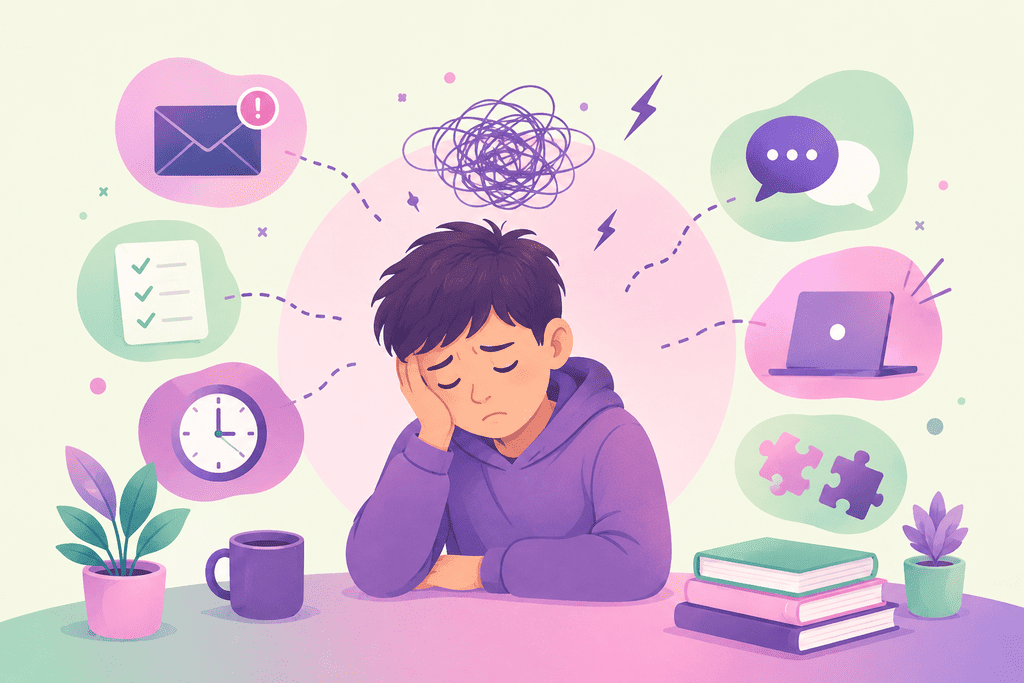
Many people mistake ADHD burnout for ordinary stress. In reality, it often feels like your brain has completely shut down, making even the simplest decisions, conversations, or daily tasks feel impossible.
What Is ADHD Burnout?
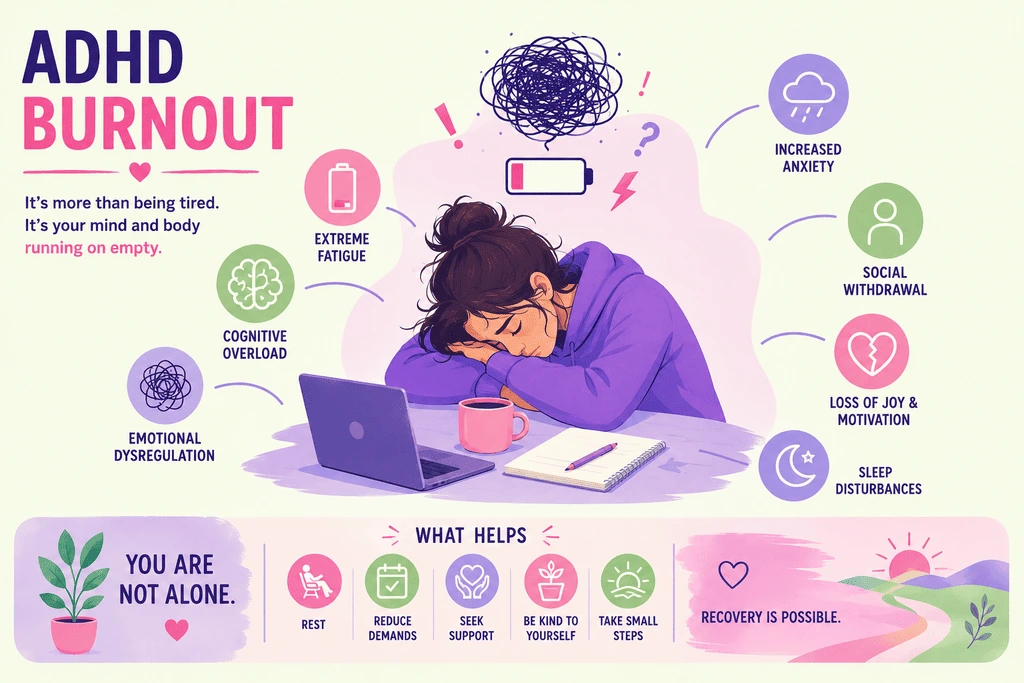
ADHD burnout is a state of intense mental, emotional, and physical exhaustion caused by the ongoing effort of living with and managing ADHD. It develops when the demands placed on a person consistently exceed their ability to recover, often after months or years of masking symptoms, maintaining concentration, meeting expectations, and coping with executive functioning challenges.
While ADHD burnout is not yet a recognised medical diagnosis, it is increasingly acknowledged by clinicians and researchers as a consequence of prolonged unmanaged ADHD.
Long waiting times for diagnosis, persistent masking, executive functioning demands and inadequate workplace or educational support can leave many people experiencing chronic exhaustion, reduced cognitive functioning and significant difficulties managing everyday life. With more than half a million people waiting for ADHD assessment in England alone, understanding and preventing ADHD burnout has become an increasingly important part of neurodiversity support.
ADHD Burnout vs General Burnout
ADHD burnout differs from general burnout.
Unlike ordinary tiredness, ADHD burnout is not resolved by simply getting more sleep or taking a short break. It can leave people feeling unable to complete everyday tasks that were previously manageable, with motivation, focus, emotional regulation, and confidence significantly reduced.
Burnout can affect anyone with ADHD, including children, teenagers, and adults, although it is particularly common during periods of increased pressure such as examinations, starting university, demanding jobs, parenting, major life changes, or prolonged workplace stress. Research also suggests that many adults receive a diagnosis only after years of unknowingly compensating for ADHD-related difficulties, making them especially vulnerable to burnout once those coping strategies become unsustainable.
Importantly, ADHD burnout is different from occupational burnout. While work can certainly contribute, ADHD burnout often affects every area of life. Difficulties extend beyond employment into home life, relationships, personal care, education, finances, and hobbies. People may lose interest in activities they usually enjoy, struggle to initiate even simple tasks, and experience a noticeable decline in overall functioning.
What Does ADHD Burnout Actually Feel Like?
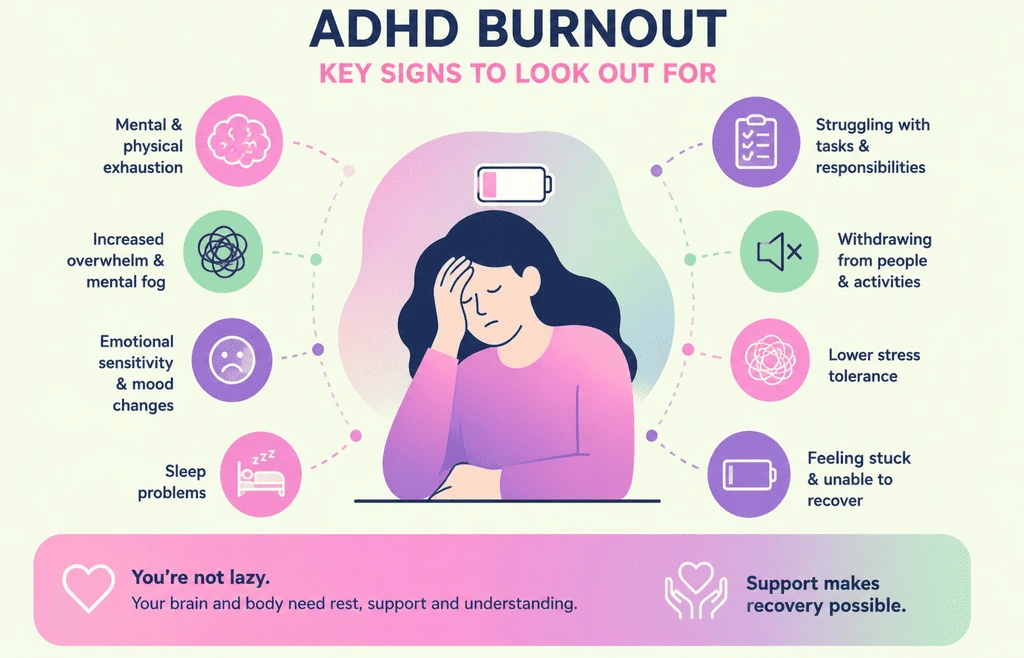
Many people describe ADHD burnout as “hitting a wall.” Activities that once required effort become overwhelming, simple decisions feel impossible, and even basic responsibilities such as replying to messages, cooking a meal, or attending appointments may feel beyond reach. This experience is often accompanied by heightened sensory sensitivity, increased emotional reactivity, forgetfulness, anxiety, and a strong desire to withdraw from work, social situations, or daily responsibilities.
ADHD burnout is closely linked to the cumulative impact of executive dysfunction. Every day, people with ADHD may spend additional mental energy organising tasks, managing time, controlling impulsivity, regulating emotions, filtering distractions, remembering important information, and masking behaviours to meet social or workplace expectations. While each challenge may appear small in isolation, the continuous mental effort can gradually drain cognitive and emotional resources until burnout occurs.
Key Signs and Symptoms of ADHD Burnout
The symptoms can vary from person to person, but they typically reflect a combination of cognitive, emotional, physical, and behavioural changes. They often become more noticeable after prolonged periods of high demands, masking, work or school pressure, caregiving responsibilities, major life changes, or ongoing stress without adequate recovery.
ADHD burnout symptoms:
- Persistent mental and physical exhaustion that does not improve after sleep or a weekend off.
- A significant increase in executive dysfunction, making it difficult to start tasks, plan, prioritise, organise, or complete even simple activities.
- Loss of motivation for work, hobbies, relationships, and everyday responsibilities that previously felt manageable.
- Difficulty concentrating, with increased distractibility, forgetfulness, mental fog, and slower thinking.
- Heightened emotional sensitivity, including irritability, frustration, feeling overwhelmed, or emotional numbness.
- More frequent ADHD symptoms, such as procrastination, missed deadlines, impulsivity, restlessness, or losing track of conversations.
- Increased sensory sensitivity, where sounds, lights, crowds, textures, or multiple conversations become much harder to tolerate.
- Reduced ability to make decisions, often leading to indecision or avoiding choices altogether because they feel mentally draining.
- Withdrawal from social interaction, cancelling plans or avoiding communication due to depleted mental energy.
- Sleep disturbances, including insomnia, difficulty waking up, sleeping far more than usual, or feeling unrefreshed regardless of sleep duration.
- Physical symptoms such as headaches, muscle tension, digestive issues, frequent illnesses, or a constant feeling of heaviness and fatigue.
- Feeling detached from personal goals or identity, often questioning your abilities or feeling incapable despite previously managing similar demands.
- Lower stress tolerance, where minor setbacks or routine tasks suddenly feel impossible to handle.
- Reduced self-care, including forgetting meals, struggling with hygiene, neglecting exercise, or finding routine daily tasks overwhelming.
- A sense of being “stuck” or unable to recover, even when trying to rest, because the nervous system remains in a prolonged state of overwhelm.
These signs often overlap with conditions such as anxiety, depression, chronic stress, and autistic burnout, which is why professional assessment is important if symptoms are severe, persistent, or significantly affect daily functioning.
What Causes ADHD Burnout?
ADHD usually develops after weeks or months of continuously pushing through responsibilities while trying to manage ADHD-related challenges such as executive dysfunction, sensory overload, emotional regulation, time blindness, and constant self-monitoring. Unlike ordinary tiredness, ADHD burnout affects almost every aspect of daily life, making even familiar tasks feel mentally and physically exhausting. Many people describe feeling as though their brain has “shut down,” leaving them unable to access the motivation, focus, or energy they once had.
Chronic Masking
Chronic masking is the long-term habit of consciously or unconsciously hiding ADHD traits to meet social, educational, or workplace expectations. People may suppress impulsive behaviours, rehearse conversations, force eye contact, overwork to compensate for attention difficulties, or constantly monitor how they appear to others. While masking can help someone navigate environments that are not designed for neurodivergent minds, maintaining this level of self-monitoring requires significant mental and emotional effort.
Over time, it can contribute to ADHD burnout, increased stress, anxiety, emotional exhaustion, low self-esteem, and a diminished sense of identity. Many adults, particularly women and people who were diagnosed later in life, report years of masking before recognising the impact it had on their wellbeing. Understanding chronic masking is an important step towards reducing burnout, promoting self-acceptance, and creating supportive environments where people with ADHD can function without feeling pressured to hide who they are.
Executive Dysfunction Overload
Executive dysfunction overload occurs when the brain’s executive functions – such as planning, organising, prioritising, starting tasks, managing time, regulating emotions, and holding information in working memory – become overwhelmed by sustained demands. For people with ADHD, this can make even routine activities feel mentally exhausting, particularly during periods of prolonged stress or burnout.
As responsibilities accumulate, the brain may struggle to filter information, switch between tasks, or make decisions, leading to procrastination, mental paralysis, forgetfulness, and reduced productivity. Research suggests that chronic stress can further impair executive functioning, creating a cycle where increasing demands lead to greater cognitive overload and deeper burnout. Recognising executive dysfunction overload as a neurological challenge rather than a lack of motivation is essential for developing effective coping strategies, reducing unnecessary pressure, and supporting long-term wellbeing.
High Expectations and Perfectionism
Many people develop high expectations and perfectionistic habits as a way to manage ADHD symptoms and compensate for past struggles with organisation, time management, or consistency. They may set unrealistically high standards, spend excessive time checking their work, overcommit to responsibilities, or avoid starting tasks unless they feel they can complete them perfectly.
While these strategies can temporarily help mask ADHD-related challenges, they often require constant mental effort and can lead to chronic stress, self-criticism, and emotional exhaustion. Over time, the pressure to perform flawlessly can become a major contributor to ADHD burnout, making it harder to focus, recover from setbacks, and maintain a healthy balance between achievement and wellbeing.
ADHD Burnout and Co-occurring Conditions
ADHD burnout is often more severe when ADHD exists alongside other mental or physical health conditions. Anxiety, depression, autism, sleep disorders, chronic pain, and substance use disorders can all increase cognitive demands, emotional distress, and daily functional challenges, making burnout more intense and recovery more difficult.
Recognising these co-occurring conditions is essential because they can influence symptoms, treatment options, and long-term wellbeing. Understanding the full clinical picture helps people access more appropriate support and develop strategies that address every factor contributing to burnout.
ADHD and Autism
Many people have both ADHD and autism, a combination often referred to as AuDHD. While each condition has distinct characteristics, together they can significantly increase the risk of ADHD burnout. Autistic traits such as sensory sensitivities, the need for routine, and social masking can combine with ADHD-related impulsivity, inattention, emotional dysregulation, and executive functioning difficulties, creating constant internal demands.
Managing these often conflicting needs requires substantial mental effort, which can lead to prolonged exhaustion, reduced daily functioning, heightened sensory overwhelm, and longer recovery periods. Recognising both conditions is essential, as effective support should address the combined impact of ADHD and autism rather than treating each condition separately.
Autistic Burnout vs. ADHD Burnout
Although autistic burnout and ADHD burnout share symptoms such as profound exhaustion, reduced daily functioning, emotional overwhelm, and difficulty managing everyday tasks, they develop for different reasons. Autistic burnout is primarily associated with prolonged masking, sensory overload, and environments that do not meet autistic needs, whereas ADHD burnout is linked to the cumulative demands of managing executive functioning difficulties, emotional dysregulation, and the ongoing challenges of living with ADHD. People with both autism and ADHD (AuDHD) may experience characteristics of both types of burnout, making accurate assessment and personalised support especially important.
ADHD and Anxiety
For many people with ADHD, anxiety develops alongside the everyday pressures of managing attention, organisation, and emotional regulation. Constant concerns about forgetting important tasks, making mistakes, or falling behind can create persistent stress that gradually becomes chronic anxiety. When both conditions are present, they often reinforce one another, increasing mental exhaustion, reducing productivity, and making ADHD burnout more likely during periods of prolonged pressure.
ADHD and Depression
Living with untreated or poorly managed ADHD can have a significant impact on emotional wellbeing over time. Ongoing struggles with executive functioning, academic or workplace performance, relationships, and self-confidence may increase vulnerability to depression. When depression occurs alongside ADHD, symptoms such as low energy, poor concentration, hopelessness, and loss of motivation often become more severe, making recovery from ADHD burnout longer and more challenging.
ADHD and OCD
Experiencing both ADHD and obsessive-compulsive disorder (OCD) can create competing demands on attention, behaviour, and decision-making. While ADHD often involves distractibility and impulsive actions, OCD is characterised by intrusive thoughts and compulsive behaviours aimed at reducing anxiety. Balancing these contrasting patterns requires considerable mental effort, which can increase cognitive fatigue, interfere with daily functioning, and contribute to the development or worsening of ADHD burnout.
ADHD Burnout in Complex Needs Cases
People experiencing ADHD burnout alongside complex needs often face greater challenges than exhaustion alone.
Difficulties with executive functioning, emotional regulation, communication, and daily activities may become significantly more pronounced when ADHD co-occurs with:
- Autism
- Learning disability
- Anxiety
- Depression
- Trauma
- Long-term physical health conditions
Because multiple factors may contribute to declining functioning, a comprehensive assessment by a qualified mental health professional is recommended when symptoms persist or interfere with work, education, relationships, or independent living. Early recognition and personalised support can improve recovery and help address the full range of underlying needs.
How to Recover from ADHD Burnout
The ADHD burnout cycle describes a repeated pattern of overcommitting, pushing through executive functioning difficulties, becoming mentally and physically exhausted, briefly recovering, and then returning to the same unsustainable demands. Over time, this cycle can trigger a chronic stress response, making it increasingly difficult to concentrate, regulate emotions, maintain routines, and recover fully. Successful ADHD burnout recovery depends on addressing both the symptoms of burnout and the underlying factors that contribute to repeated cycles of stress, allowing cognitive functioning, emotional wellbeing, and energy levels to gradually improve while reducing the risk of future burnout.
Mental Health Support with Nurseline Community Services
At Nurseline Community Services, we provide specialist mental health support for people living with multuple needs in complex situations, including ADHD, autism, co-occurring mental health conditions, and ADHD or autistic burnout. Our multidisciplinary team includes Community Psychiatric Nurses (CPNs), Positive Behaviour Support (PBS) specialists, and highly trained support teams who work together to deliver personalised, nurse-led care.
Chronic stress, prolonged emotional dysregulation, and unmet needs can lead to burnout or even a mental health crisis. If left unaddressed, this can result in crisis escalation, hospital admission, breakdown of existing care arrangements, or placement outside the person’s local area.
That’s why we’re here. We support people experiencing a mental health crisis with person-centred, tailored care that helps them remain safely in their own homes and communities whenever possible.
Using comprehensive clinical assessments, trauma-informed practice, Positive Behaviour Support, sensory-informed strategies, occupational therapy, communication support, and evidence-based emotional regulation approaches, we help people manage emotional dysregulation, reduce distress, build independence, and develop the skills needed to live safely and confidently within their communities.
For more information on how we can support you, contact us today!
FAQs
How long does ADHD burnout last?
There is no fixed timeline for ADHD burnout. Recovery can take weeks or months depending on the severity of burnout, the demands placed on the person, co-occurring conditions, and access to appropriate support. Early recognition and personalised interventions can help improve recovery.
Is ADHD burnout common in autism?
Yes. People with both ADHD and autism (AuDHD) are considered to have a higher risk of burnout because they often experience the combined effects of executive functioning difficulties, sensory overload, emotional dysregulation, and prolonged masking.
What support is available in the UK?
Support may include an assessment by a GP or mental health professional, referrals to NHS or specialist community services, psychological therapies, occupational therapy, medication reviews where appropriate, workplace or educational adjustments, and support from specialist providers experienced in ADHD, autism, and complex mental health needs.