Key Takeaways
- Anxiety is a natural response to stress, but persistent worry can affect everyday life.
- Over 8 million people in the UK are estimated to experience an anxiety disorder at any given time.
- Anxiety disorders are nearly twice as common in women as in men.
- Anxiety disorders often begin in childhood or adolescence, but can develop at any age.
- Symptoms can be physical and psychological, including racing thoughts, restlessness, fatigue and sleep difficulties.
- Anxiety may have multiple causes, including genetics, trauma, prolonged stress and existing health conditions.
- In complex care, anxiety can interact with other conditions, requiring personalised, coordinated support.
- Anxiety is treatable, with psychological therapies, coping strategies and medication where appropriate.
- Only around 27.6% of people with anxiety disorders get the treatment they need.
We all know what it feels like to worry. Before an important decision, while waiting for medical results, when someone we love is struggling, or when life suddenly becomes uncertain.
But imagine feeling that same sense of worry when there is no clear reason for it. When reassurance doesn’t help, when your mind keeps searching for something that could go wrong, and when even the smallest decisions begin to feel overwhelming.
For millions of people, anxiety affects far more than occasional moments of stress. It can influence how they sleep, work, maintain relationships and experience everyday life. In complex care, anxiety can be closely connected with physical health conditions, mental health difficulties and neurodevelopmental differences, often influencing one another and making coordinated, multidisciplinary support particularly important.
Understanding anxiety means looking beyond the symptoms to explore what people are experiencing, why these feelings develop and what can genuinely help.
What is Anxiety?
Anxiety is the body’s natural response to a perceived threat, uncertainty or stress. It activates the fight-or-flight response, releasing stress hormones such as adrenaline and cortisol that prepare the body to react. This can increase heart rate, speed up breathing and heighten alertness, even when there is no immediate physical danger.
Feeling anxious before a job interview, a medical appointment or an important life event is normal. However, when fear and worry become excessive, difficult to control or persist without an obvious cause, anxiety can interfere with everyday life. It may develop into an anxiety disorder, particularly when people begin avoiding activities, relationships or situations because of how they feel.
Anxiety can also occur alongside other mental health conditions, including:
- Depression
- Post-traumatic stress disorder (PTSD)
- Obsessive-compulsive disorder (OCD)
- Eating disorders
It is also common among autistic people and can coexist with ADHD. Recognising these connections is important because anxiety may affect how someone experiences and manages other difficulties, while existing conditions can also contribute to anxiety.
The Difference Between Everyday Anxiety and an Anxiety Disorder
Everyday anxiety usually has a clear trigger, such as an upcoming exam, financial difficulties or a stressful situation at work. The feelings are often temporary and become less intense once the situation has passed. An anxiety disorder, however, involves fear or worry that is excessive, persistent or difficult to control. Symptoms may occur without an obvious trigger and can continue even when there is no immediate threat.
The main difference is how often anxiety occurs, how intense it becomes and how much it affects daily life. Anxiety disorders can cause physical and psychological symptoms that interfere with sleep, concentration, relationships and everyday activities.
For example:
| Everyday Anxiety | Anxiety Disorder |
|---|---|
| Usually linked to a specific situation or stressor. | May occur without an obvious trigger. |
| Worry generally reduces when the situation passes. | Worry or fear can persist long after the situation has passed. |
| Feelings are usually manageable. | Fear or worry may feel overwhelming or difficult to control. |
| Temporary nervousness or physical tension. | Frequent physical symptoms, such as a racing heart, nausea or dizziness. |
| Usually does not significantly disrupt daily routines. | Can affect sleep, work, education, relationships and independence. |
| Feeling nervous before a social event. | Repeatedly avoiding social situations due to intense fear of judgement. |
| Worrying while waiting for medical results. | Persistent fear of serious illness despite appropriate medical reassurance. |
Common Types of Anxiety
Anxiety disorders can affect people in very different ways. Some involve constant worry about everyday situations, while others cause intense fear in specific environments, social interactions or moments of separation. For some people, anxiety appears suddenly through panic attacks. For others, it develops gradually, leading to avoidance, changes in behaviour or difficulties with everyday activities.
Anxiety disorders are classified according to the nature of the fear, what triggers it and how symptoms affect daily life. Understanding these differences is important because not all anxiety disorders respond to the same treatment, and people may experience more than one anxiety disorder at the same time.
Main Types of Anxiety Disorders
The following seven conditions are recognised under the World Health Organization’s ICD-11 classification of anxiety or fear-related disorders.
1. Generalised Anxiety Disorder (GAD)
GAD involves persistent, excessive worry about several aspects of life, including health, finances, relationships or work. People may anticipate problems even when there is little evidence that something will go wrong.
Common signs include difficulty controlling worry, muscle tension, restlessness, fatigue and poor sleep.
2. Panic Disorder
Panic disorder involves recurrent, unexpected panic attacks, followed by ongoing fear of another attack or changes in behaviour to prevent one. Panic attacks can reach their most intense point within just a few minutes.
During a panic attack, someone may experience:
- A racing heartbeat, trembling or sweating
- Chest discomfort, dizziness or breathlessness
- Intense fear of losing control or dying
A single panic attack does not necessarily mean someone has panic disorder.
3. Social Anxiety Disorder
Social anxiety disorder involves an intense fear of being judged, embarrassed or negatively evaluated by others.
It can affect everyday activities such as meeting new people, speaking in groups, eating in public or attending work and school. People may avoid social situations or experience significant distress before, during and afterwards.
4. Agoraphobia
Agoraphobia involves intense fear of situations where escaping might be difficult or support may be unavailable if something goes wrong.
Examples include:
- Using public transport
- Standing in queues or crowded spaces
- Visiting shopping centres
- Leaving home alone
Severe agoraphobia can make leaving home extremely difficult. It can occur with or without panic disorder.
5. Specific Phobias
Specific phobias involve excessive fear of a particular object, animal, activity or situation. The fear is disproportionate to the actual danger and can lead to significant avoidance.
Examples include:
- Claustrophobia: Fear of enclosed spaces
- Acrophobia: Fear of heights
- Arachnophobia: Fear of spiders
- Trypanophobia: Fear of needles or injections
- Aerophobia: Fear of flying
- Social phobia: Fear of social situations
These are examples of specific phobias, not separate diagnostic categories.
6. Separation Anxiety Disorder
This involves excessive anxiety, fear or distress about being separated from someone to whom a person is strongly attached.
Although commonly associated with children, it can also affect adults. Symptoms may include persistent worry about losing a loved one, refusing to sleep alone, nightmares about separation or difficulty attending school or work.
7. Selective Mutism
Selective mutism is characterised by a consistent inability to speak in particular social situations, despite being able to speak comfortably in others.
For example, a child may communicate freely at home but be unable to speak at school. It is associated with anxiety and should not be mistaken for deliberate refusal, defiance or a lack of language ability.
Other Conditions Commonly Associated with Anxiety
Several other conditions involve significant anxiety but are classified separately from the seven main anxiety disorders.
| Condition | How anxiety is experienced |
|---|---|
| Health Anxiety | Persistent fear of having or developing a serious illness, often involving body checking, reassurance-seeking or avoidance of medical information. |
| Obsessive-Compulsive Disorder (OCD) | Intrusive thoughts or fears may cause intense distress, with repetitive behaviours or mental rituals used to reduce anxiety. |
| Post-Traumatic Stress Disorder (PTSD) | Anxiety associated with traumatic experiences, often involving hypervigilance, avoidance, flashbacks or nightmares. |
| Mixed Anxiety and Depressive Disorder | Anxiety and depressive symptoms occur together, without either independently meeting the full requirements for a separate disorder. |
| Substance-Induced Anxiety | Anxiety symptoms associated with substance use, intoxication, withdrawal or certain medications. |
| Anxiety Due to a Medical Condition | Anxiety directly linked to the physiological effects of an underlying health condition. |
Clinical distinction: OCD and PTSD are classified separately from anxiety disorders in ICD-11. Health anxiety is commonly discussed within anxiety services, although its diagnostic classification differs.
For people receiving complex care, recognising the type and possible causes of anxiety is particularly important. Symptoms may overlap with existing mental health conditions, physical health difficulties or neurodevelopmental differences. A thorough assessment can identify what is contributing to distress and inform the most appropriate support.
How Common is Anxiety in Complex Care?
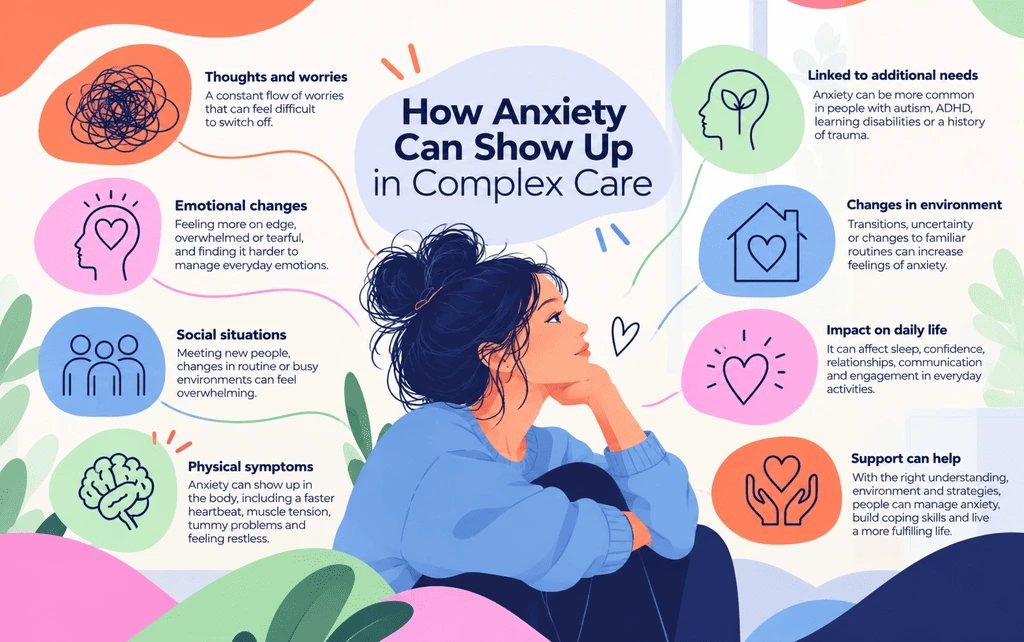
Anxiety is a common experience among autistic people, people with ADHD, learning disabilities and other mental health conditions. Research suggests that around 40% of autistic children and young people experience an anxiety disorder, while estimates among adults with ADHD range from 25% to 50%, depending on the study.
For people receiving complex care, anxiety can make everyday situations, relationships and changes in routine more difficult to manage. Sometimes, distress is expressed through withdrawal, changes in behaviour, difficulties sleeping or avoiding activities they previously enjoyed. Recognising these signs and understanding what someone is experiencing can make a real difference to the support they receive.
Why Anxiety May Be More Common or More Difficult to Identify in Complex Care?
People with complex care needs may experience anxiety for reasons directly related to their health, environment and daily support. For autistic people, sensory sensitivities, uncertainty and unexpected changes can trigger anxiety disorders or worsen existing symptoms. People with ADHD may experience anxiety linked to difficulties with emotional regulation, organisation and repeated negative experiences. For people with learning disabilities, difficulties understanding or communicating what is happening can make unfamiliar situations particularly distressing.
Symptoms of anxiety may also be mistaken for characteristics of an existing condition, a problem known as diagnostic overshadowing. For example, repeated questioning may reflect reassurance-seeking, withdrawal may indicate fear, and increased agitation may be a response to anxiety rather than deliberate resistance. Physical symptoms, including headaches, stomach discomfort and sleep disturbances, can also be overlooked or attributed to other health conditions. This makes individual assessment essential, particularly when someone cannot easily explain what they are feeling.
Anxiety Alongside Other Conditions
Anxiety can develop alongside existing conditions or make everyday difficulties more intense. For example, it may increase sensory sensitivities in autistic people, worsen concentration difficulties in people with ADHD, or intensify physical symptoms in people with long-term health conditions. Recognising these connections can help identify when someone needs additional mental health support.
Anxiety and Autism or Learning Disabilities
Research suggests that around 40% of autistic children and young people experience an anxiety disorder, compared with approximately 6–7% of children in the general population. Anxiety may be associated with social uncertainty, sensory sensitivities and difficulties coping with unexpected situations.
People with learning disabilities are also at increased risk of anxiety, particularly when they have limited opportunities to make decisions or struggle to communicate their needs. Anxiety may go unrecognised when distress is attributed to a learning disability, delaying access to appropriate mental health support.
Anxiety and Neurological Conditions
Anxiety is common among people with neurological conditions such as epilepsy, Parkinson’s disease, multiple sclerosis (MS) and acquired brain injuries. Research suggests that around 20–30% of people with epilepsy experience an anxiety disorder, while anxiety symptoms affect approximately 30–40% of people with Parkinson’s disease.
Anxiety may develop from uncertainty about seizures, changes in mobility, cognitive difficulties or concerns about losing independence. In some neurological conditions, changes in brain function can also contribute directly to anxiety symptoms. This makes it important to consider both neurological and psychological factors when planning treatment and support.
Anxiety, Trauma and Previous Care Experiences
Past traumatic experiences can increase the risk of developing anxiety disorders, particularly when someone has experienced abuse, neglect, repeated hospital admissions or restrictive practices. For people receiving complex care, experiences such as physical restraint, forced interventions or prolonged separation from family can affect their sense of safety and trust in others.
Anxiety may become particularly intense in situations that remind someone of previous distress, such as medical procedures, unfamiliar care staff or changes in their environment. Trauma-informed care focuses on recognising these triggers, reducing the risk of retraumatisation and giving people greater choice and control over their support.
Recognising Anxiety in Someone with Complex Needs
Anxiety isn’t always easy to recognise, particularly when someone struggles to explain how they feel physically or emotionally. The first indication may be a change in behaviour, communication, sleeping habits or willingness to participate in familiar activities.
What Signs Should We Look For?
- Emotional signs: Increased fear, irritability, distress or frequent reassurance-seeking.
- Physical symptoms: Muscle tension, rapid breathing, stomach discomfort, headaches or changes in appetite.
- Behavioural changes: Withdrawal, avoidance, increased agitation or difficulty with everyday routines.
- Environmental factors: Sensory overload, unfamiliar staff, sudden changes or unpredictable environments.
- Risk factors: Previous mental health difficulties, a traumatic event, communication barriers or past restrictive care experiences.
When Should Changes Raise Concern?
A person who suddenly refuses a favourite activity, becomes distressed during personal care or starts waking repeatedly at night may be experiencing anxiety. However, these changes can also indicate pain, illness, medication side effects or other symptoms requiring medical attention.
The most useful starting point is understanding what is normal for that individual. Recording when changes occur, what happened beforehand and how long the distress lasts can help families and care professionals identify patterns and decide when further assessment is needed.
How Complex Care Providers Can Support Someone with Anxiety
Supporting someone to manage anxiety requires both person-centred strategies and multidisciplinary support. A specialist mental health provider can coordinate an individualised treatment plan that reflects the person’s experiences, preferences and existing conditions.
From Understanding Anxiety to Providing Support
| Step | Approach | How It Supports the Person |
|---|---|---|
| 01. Recognise | Identify triggers, early warning signs and communication needs. | Helps understand what causes anxiety and how distress is expressed. |
| 02. Adapt | Adjust routines, sensory environments and everyday demands. | Reduces avoidable stress and creates greater predictability. |
| 03. Support | Offer breathing exercises, grounding techniques and visual communication tools. | Helps people manage anxiety and develop coping skills. |
| 04. Review | Mental health nurses, PBS specialists and families review progress. | Ensures the treatment plan reflects changing needs and personal goals. |
Support With Nurseline Community Services
Living with anxiety can make everyday life challenging, particularly for people with additional mental health needs, neurodevelopmental differences or complex physical health conditions. At Nurseline Community Services, we provide personalised, nurse-led mental health and complex care support tailored to each person’s needs and experiences.
Our multidisciplinary teams focus on:
- Positive Behaviour Support (PBS): Understanding triggers and using proactive strategies to prevent distress.
- Trauma-informed care: Creating a sense of safety, trust and emotional security.
- Community mental health nursing: Supporting emotional well-being, managing symptoms and coordinating care.
- Personalised coping strategies: Building emotional regulation skills, confidence and independence.
- Family involvement: Working with loved ones and professionals to provide consistent support.
Our goal is to help people feel more confident, maintain meaningful relationships and enjoy greater choice and independence in everyday life.
Looking for specialist anxiety or complex care support? Contact Nurseline Community Services today to discuss your needs.